


Search Website
Learn Beyond the Classroom
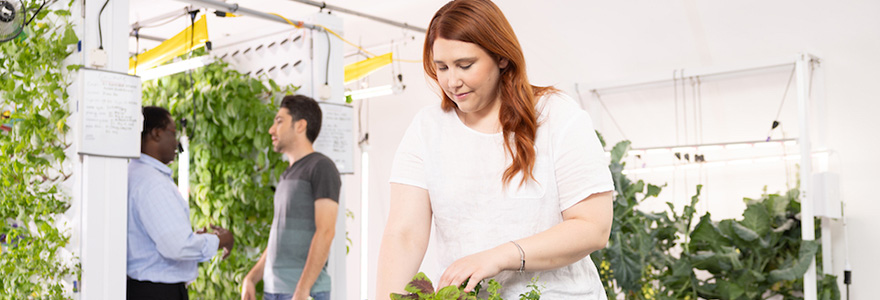
Western’s School of Food and Nutritional Sciences offers various opportunities to bring classroom learning to life.
Apply what you are learning to real-world scenarios, explore your interests, and build your skills and resume – all while earning academic credit.
Click the tiles below to discover more about each type of experiential learning opportunity.
Types of Experiential Learning Opportunities

Interested in international experiential learning opportunities or exchange? Visit Western International Learning or email goabroad@uwo.ca to learn more.
Questions? Email experiencefhs@uwo.ca.
Frequently Asked Questions
Applications for Fall/Full year placements are open March 1 to April 1 of every year, and Winter applications are open in September. Students must attend a mandatory resume workshop and then apply via InPlace. Then, we will match you with an organization, you will interview, and then complete all pre-placement requirements before enrolling in the course.
There are pre-placement requirements for all placements (in-person, hybrid, or remote). All students participating in experiential learning (practicum, internship, etc.) are required to complete pre-placement requirements.
Please read this pre-placement guide to learn more about the pre-placement requirement process.
We currently do pre-placement reviews for in-person/hybrid placements through a third-party platform called Synergy. This process includes uploading proof of N95 mask fit testing and a Vulnerable Sector Check (if required). Students placed at organizations like hospitals and long-term care will also need to complete an additional enhanced review. This additional step involved providing documentation of immunizations, bloodwork, and TB testing. Remote/hybrid placement students must also complete an Ergonomics at Work module.
These requirements are set by the Faculty of Health Sciences for all students participating in a practicum. Additionally, individual placement sites may impose their own pre-placement requirements, such as CPR certification or completing specific training modules. It is the responsibility of the student to confirm with their preceptor is there are organization-specific requirements.
Students are responsible for any fees associated with meeting these pre-placement requirements. These costs are essential for participation in the practicum.
Students enrolled in all experiential learning courses will have scheduled in-class time (typically 3-4 meetings per term), and attendance is mandatory. There is no scheduled or required class time for students completing an Independent Study.
Students do not get special permission to enrol in the experiential learning or independent study course until all pre-placement requirements and other application requirements have been met.
We recommend using a placeholder course until you can enrol to ensure that you meet graduation requirements. Please reach out to Academic Advising if you have any questions.
The practicum course requires students to spend on average 6-8 hours working with the organization or community partner each week of the term (generally 11-12 weeks for a one semester course and 22-24 weeks for a full placement). Students must complete a minimum of 75 hours per term.
The time commitment may fluctuate each week depending on the needs of the organization and type of project the students are involved with. In addition, there are course requirements, including classes, a learning contract, assignments, reflections, etc.
KIN4585 (Athletic Injuries practicum), KIN4495 (Strength and Conditioning practicum), and KIN 4590 (Clinical Kinesiology practicum), as well has RS 4970 (Rehabilitation Sciences practicum), are all graded.
The other practicum courses (e.g. HS/KIN 4995/4996/4997) are Pass/Fail.
No. If you would like a full year course, you must take HS 4997/ KIN 4997.
A practicum is unpaid, part-time and is designed to be taken along with other courses. An internship is paid, full-time (i.e. you are not taking other courses at the same time), and you must return for a minimum of 3.5 credits after the internship concludes.
Yes, as long as the internship is a 0.5 credit internship (i.e. one term, either Summer, Fall, or Winter).
To apply for an internship, you must send the Internship Application Form, your resume, and proof of completion of the Career Fundamentals: Developing an Effective Cover Letter and Resume module to experiencefhs@uwo.ca. Once we confirm your eligibility, we will add you to Western Connect and then you can view and apply for internship opportunities.
To learn more about and apply for the independent study, please contact:
- shsinfo@uwo.ca (School of Health Studies)
- kinug@uwo.ca (School of Kinesiology)
- fnsinfo@uwo.ca (Brescia School of Foods and Nutritional Sciences and Family Studies)
Each independent study course is a unique arrangement between the student and faculty supervisor. The expectations and required time commitment will be different for each student. There are required course components in addition to the project arranged with your supervisor, which includes a project proposal, abstract submission and presentation at the year-end research forum. There is also a weekly one-hour tutorial/seminar.
Yes. Students can take both courses in their senior year. The independent study does not count towards the 1.0 experiential learning credit maximum.
It is recommended that you contact potential supervisors early (usually in the spring for a fall independent study project and early fall for a winter term course). Consider your specific interests and approach faculty members who share a similar area of interest and with whom you feel there would be a positive working relationship. Not all faculty members supervise independent study students. There is no list of potential supervisors. Email Academic Advising for more information.