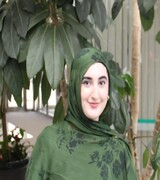
Nawal Faysal is an undergraduate student in her fifth year at Western University, completing her Bachelor of Science. Through her academic studies and lived experiences, she has become deeply aware of inequities in healthcare access for marginalized communities and persistent disparities in healthcare research. These experiences have motivated her involvement in programs and educational initiatives centered on women’s health, with a particular focus on women from minority backgrounds. Looking ahead, Nawal hopes to pursue research and professional work aimed at improving health outcomes and advancing equity for minority women.
The Canada-Africa Academic Collaborations Conference (CAACC)
The Africa Institute at Western is pleased to announce it will be hosting its Canada Africa Academic Collaborations Conference (CAACC) on February 26-27, 2026. The Conference will present collaborative research and other scholarly initiatives, between Canada and Africa.
COUNTDOWN TO 2026 CAACC
When: February 26-27, 2026, 8:30 AM Eastern Time (US and Canada)
Topic: Canada-Africa Academic Collaborations Conference (CAACC)
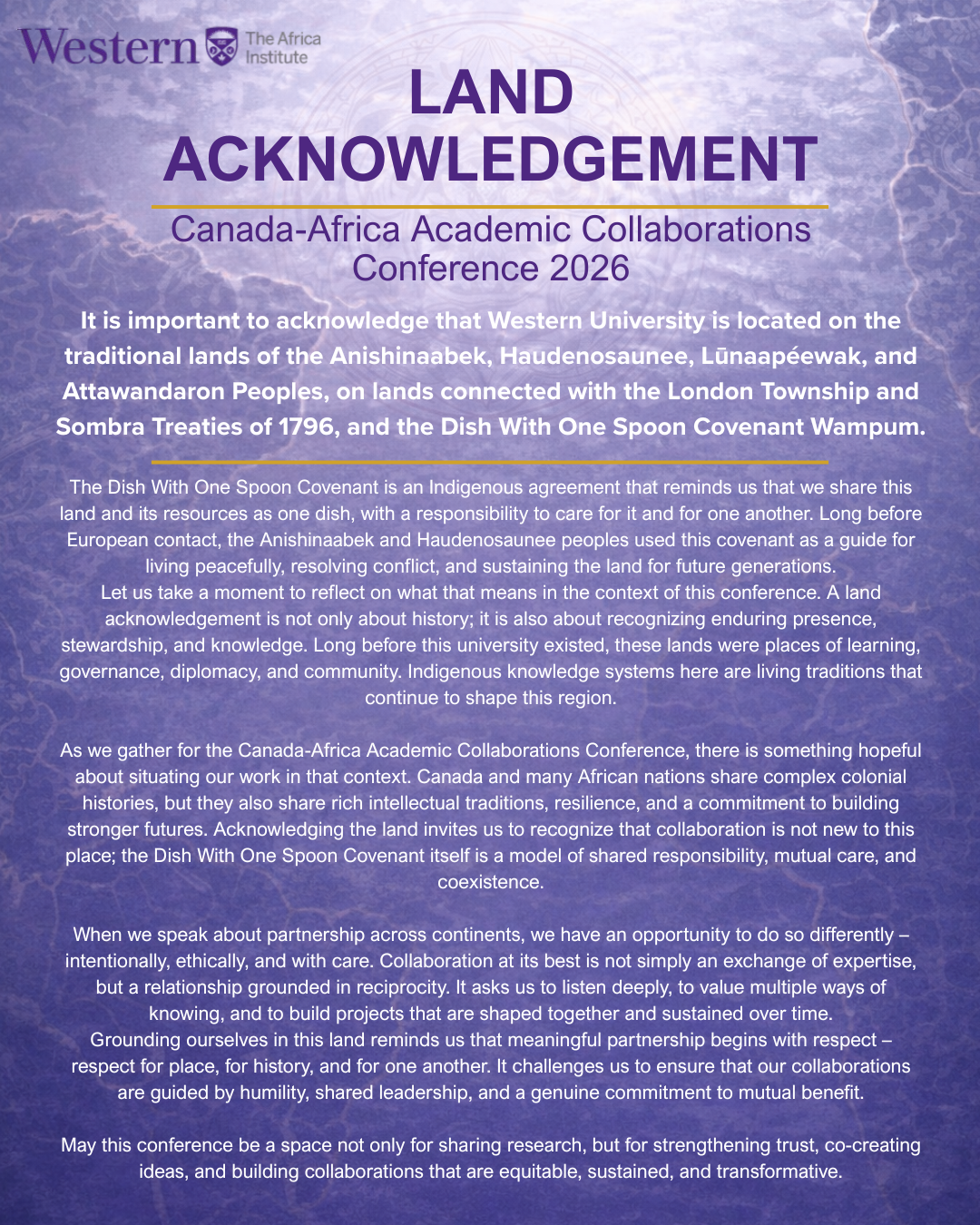
Conference Theme: Advancing Transdisciplinary Approaches for Inclusive and Sustainable Global Solutions
Co-Chairs: Pauline Omolo (The University of Nairobi, Kenya) and Brianne O’Sullivan (Western University, Canada)
Program: February 26-27, 2026, 8:30 AM – 3:30 PM (Eastern Standard Time)
Registration Link: https://westernuniversity.zoom.us/webinar/register/WN_g5m8mQ2BSHConIqulTK_JA
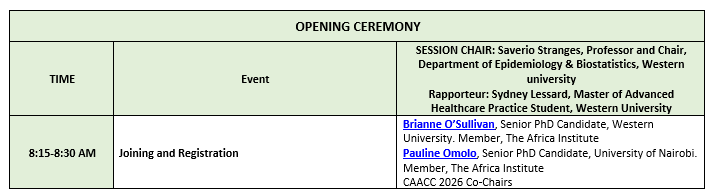
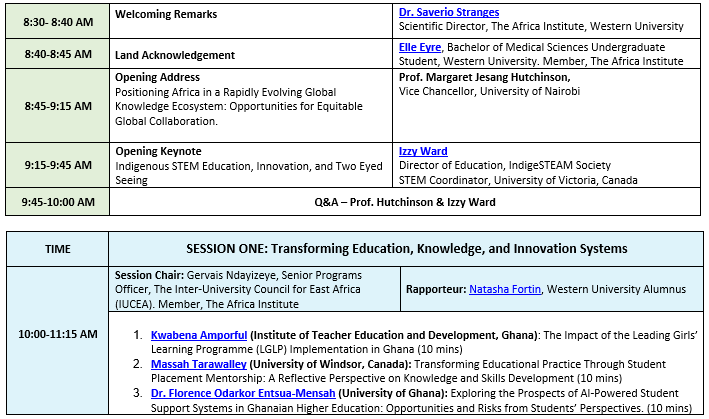
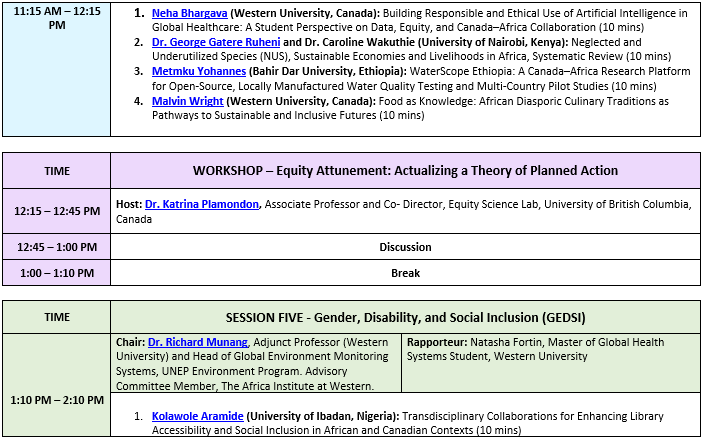
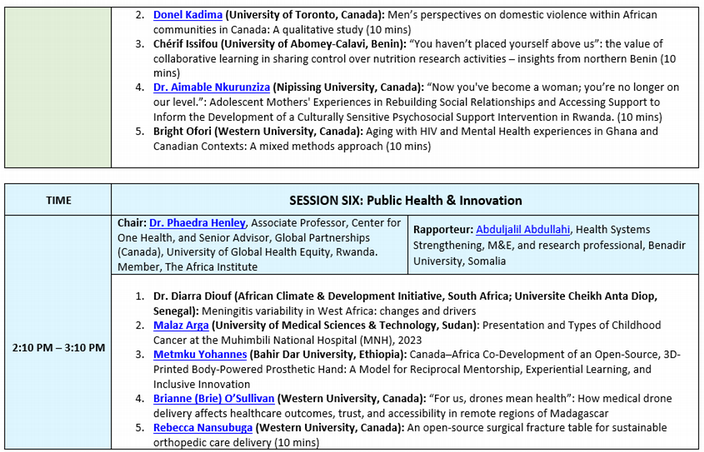
DAY 1: FEBRUARY 26, 2026
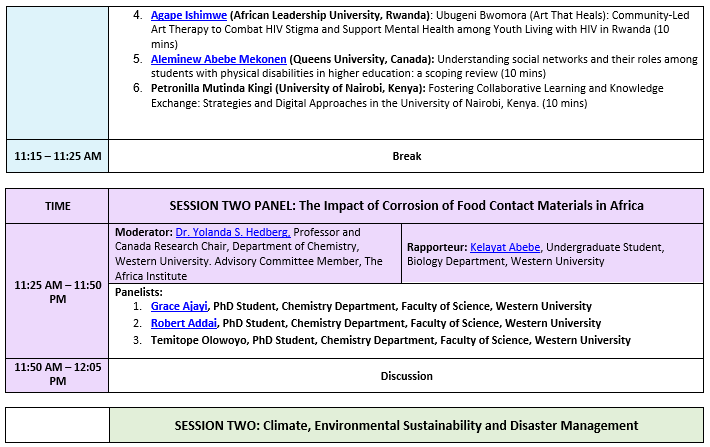
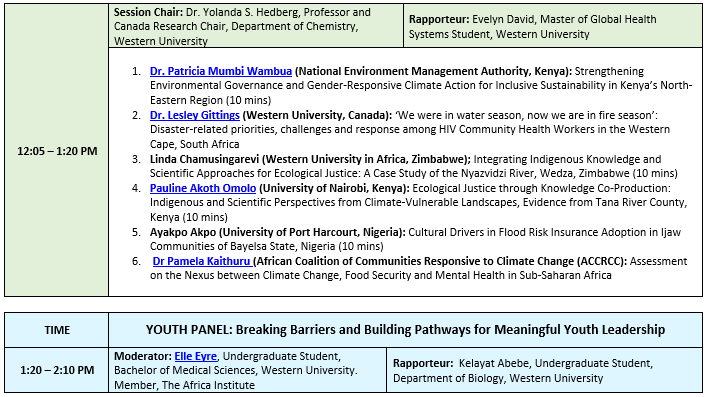
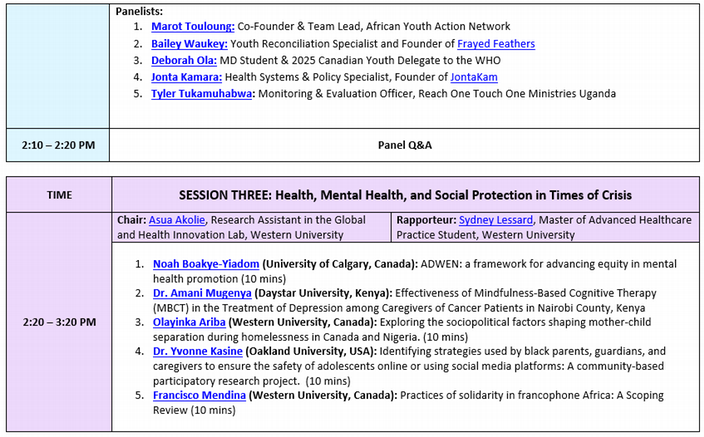

DAY 2: FEBRUARY 27, 2026
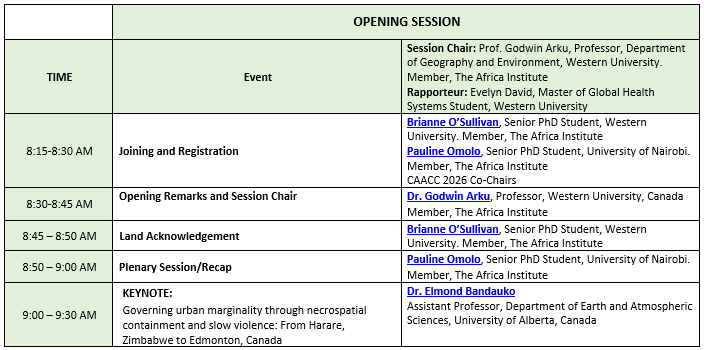
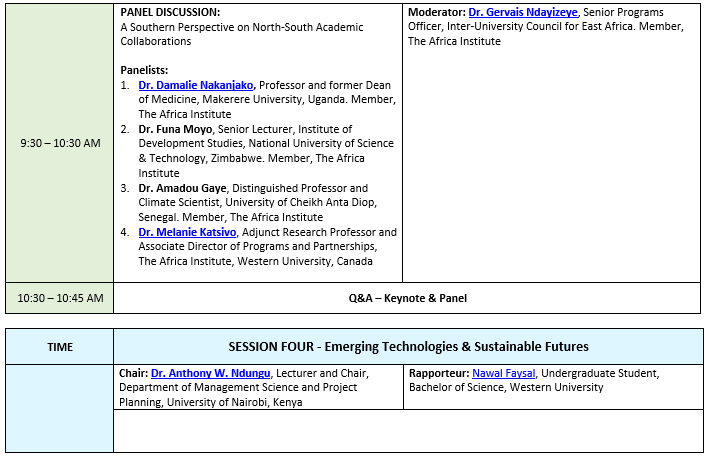

2026 CAACC Conference Committee
Conference Co-Chairs:
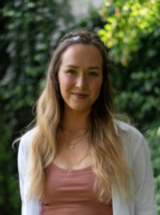 Brianne O’Sullivan is a medical drone researcher and PhD candidate at Western University in the fields of public and global health, with experience leading research on medical delivery drone systems in Canada and across sub-Saharan Africa, with partners such as Transport Canada, Indigenous Services Canada, WHO, the United Nations Humanitarian Air Service (UNHAS/WFP), Drone Delivery Canada, and Zipline. Her doctoral work focuses on establishing foundational research on medical drone systems and assessing their impact on equitable and accessible healthcare in remote regions. Funded by multiple grants from the Government of Canada, she spent 5 months in Madagascar and Rwanda collecting data for four unique studies on medical delivery drone systems. In addition, Brie has spoken on behalf of Canada as a UN delegate in Geneva, Washington D.C., and Ottawa.
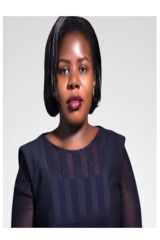 Pauline Akoth Omolo is an Evaluation Specialist, Project Management Professional, and Gender and Inclusion Analyst with over 15 years of experience in development, humanitarian programming, and academia. She is a PhD candidate in Project Planning and Management at the University of Nairobi. Pauline also is a part time lecturer and consults at the University of Nairobi, supporting national and international organizations including UNICEF, WFP, UN-OCHA, Save the Children, and TradeMark Africa. Her expertise spans end-line evaluations, programme design, policy reviews, GEDSI analyses, and strategy development across education, health, nutrition, and livelihoods sectors. A strong advocate for participatory and inclusive evaluation, Pauline integrates feminist and intersectional approaches in her work. She is an active member of the Evaluation Society of Kenya and mentors emerging evaluators, championing professionalization, ethical practice, and evidence-based learning for sustainable development across Africa.
Scientific Committee Co-Chairs:
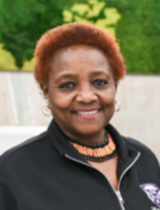 Dr. Melanie N. Katsivo is Associate Director (Programs & Partnerships) of The Africa Institute at Western University and International Partnerships Lead for the Frugal Biomedical Innovations program. She holds a PhD in Educational Communication & Technology (Health Promotion), an MA in Sociology (Health), and a BA in Education (Nutrition & Human Ecology). Dr. Katsivo’s work spans promoting equity, diversity, and inclusion in academia, designing global health education initiatives in Canada and Africa, and advancing research into climate change, sustainable livelihoods, and frugal biomedical innovation. She has led multiple international research-exchange programs for learners and early-career scholars, collaborated on cross-continental grants with African universities, and co-authored publications on inclusive program design and health systems strengthening, positioning her as a bridge between global research and local impact.
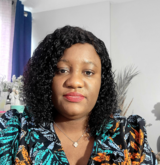
Massah Tarawalley is the Co-Founder and Executive Director of WeBridge Community Services, as well as a Ph.D. student at the University of Windsor's School of Social Work. Her research interests include Mental Health, War Trauma, Refugee Settlement, Social and Health Equity, Anti-racism and Oppression, Equity, Diversity and Inclusion (EDI), Decolonization, and Qualitative research. In addition to her academic and professional roles, Massah is recognized as a member of the advisory board of the Africa Institute at Western University in Canada. She is dedicated to promoting culturally responsive and accessible mental health support across Africa and within the diaspora.
Organizing Committee Members:
Massah Tarawalley is the Co-Founder and Executive Director of WeBridge Community Services, as well as a Ph.D. student at the University of Windsor's School of Social Work. Her research interests include Mental Health, War Trauma, Refugee Settlement, Social and Health Equity, Anti-racism and Oppression, Equity, Diversity and Inclusion (EDI), Decolonization, and Qualitative research. In addition to her academic and professional roles, Massah is recognized as a member of the advisory board of the Africa Institute at Western University in Canada. She is dedicated to promoting culturally responsive and accessible mental health support across Africa and within the diaspora.
Wale Fadare is Program Coordinator for Western's Global Health Systems graduate program where he manages stakeholder relations and African field placements for 35+ graduate students annually. With a medical degree (University of Ibadan, Nigeria) and Master's in Health Information Science (Western University), Wale brings two decades of experience in clinical practice, global health program management, and knowledge translation. His graduate thesis (exploring “know-do gaps” in global health research partnerships in Africa) was the recipient of Western University’s Eugenia Canas Memorial Award, connecting his dedication to equitable global health partnerships with mentoring future health leaders through reciprocal South-North learning models.
 Elle Eyre is an undergraduate student in an Honors Specialization in Pathology (BMSc) at Western University. Her passion for global health deepened after traveling to Kenya, where she witnessed firsthand the challenges of accessing healthcare in rural communities. Since then, she has been committed to initiatives that promote equity in health and education, including fundraising for Veronica Home, an orphanage for HIV-positive children in Kenya. As an executive member of Western’s Health Buddy Club, Elle helps foster peer connection and well-being within the student community. She hopes to pursue a career in medicine focused on global health, bridging cultures through compassionate and sustainable healthcare efforts.
Dr. Melanie N. Katsivo is Associate Director (Programs & Partnerships) of The Africa Institute at Western University and International Partnerships Lead for the Frugal Biomedical Innovations program. She holds a PhD in Educational Communication & Technology (Health Promotion), an MA in Sociology (Health), and a BA in Education (Nutrition & Human Ecology). Dr. Katsivo’s work spans promoting equity, diversity, and inclusion in academia, designing global health education initiatives in Canada and Africa, and advancing research into climate change, sustainable livelihoods, and frugal biomedical innovation. She has led multiple international research-exchange programs for learners and early-career scholars, collaborated on cross-continental grants with African universities, and co-authored publications on inclusive program design and health systems strengthening, positioning her as a bridge between global research and local impact.
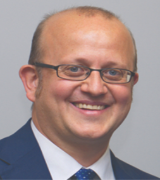 Dr. Saverio Stranges is Professor and Chair of the Department of Epidemiology & Biostatistics in the Schulich School of Medicine & Dentistry at Western University, and Director of the Africa Institute at Western University. He trained as a medical doctor at the University of Naples Federico II (Italy), completed specialty training in Preventive/Public Health Medicine, and earned a PhD in Epidemiology & Environmental Health at the State University of New York at Buffalo. His research focuses on chronic disease epidemiology and aging, including lifestyle, nutritional and psychosocial determinants of health, and he is also deeply committed to global health - especially tackling non‑communicable diseases in low‑resource settings.
 Natasha Fortin recently completed her Master of Health Sciences in Global Health Systems at Western University, where she worked with Reach One Touch One Ministries in Uganda and learned about community-driven approaches to geriatric care. She holds a Bachelor of Science (Honours) in Medical Sciences with a Certificate in Medical Humanities from Dalhousie University. During her time at Dalhousie, her research focused on telemedicine in stroke care and the gut microbiota’s connection to neurodegeneration. Natasha is passionate about global health equity and the impacts of climate change on health. Outside of her academic and research pursuits, Natasha volunteers as a youth curling coach.
 Evelyn David is an MSc candidate at Western University in the field of Global Health Systems and an Administrative and Research Coordinator at ACCHO (African and Caribbean Council on HIV/AIDS in Ontario). After completing her BSc at McMaster University in Psychology, Neuroscience and Behaviour, she pursued a career in non-governmental organizations with a growing interest in health systems, equity and accessibility to care, particularly for marginalized communities. With experience supporting educational outreach, research initiatives, and community-based health support, Evelyn ensures that findings are translated into actionable strategies that strengthen programs and services for vulnerable communities throughout Ontario.
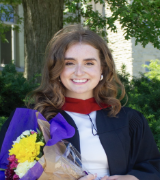
Sydney Lessard is a researcher and Master of Advanced Healthcare Practice candidate at Western University. She previously spent three months in Uganda conducting research on access to gender-affirming hormone therapy for trans women, in collaboration with the Infectious Diseases Institute as part of her Master of Global Health Systems. Currently, she is leading a scoping review project in collaboration with St. Joseph’s Healthcare London to develop a trauma-informed pathway connecting individuals experiencing homelessness and living with HIV to primary care at the hospital. Her work focuses on advancing equitable, patient-centered, and culturally safe healthcare for marginalized populations.

Kelayat Abebe is an undergraduate student in her third year at Western University, pursuing a Bachelor of Science with a specialization in Biology. Her interest in healthcare and community well-being has been shaped by her commitment to supporting others through meaningful service. Through leadership and volunteer experiences working with youth and diverse communities, including involvement in student organizations and mentorship initiatives, Kelayat is dedicated to building inclusive spaces where people feel supported and valued. She hopes to pursue a future career in healthcare, with a focus on compassionate, community-driven care and improving access to services.
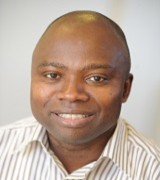
Wale Fadare is Program Coordinator for Western's Global Health Systems graduate program where he manages stakeholder relations and African field placements for 35+ graduate students annually. With a medical degree (University of Ibadan, Nigeria) and Master's in Health Information Science (Western University), Wale brings two decades of experience in clinical practice, global health program management, and knowledge translation. His graduate thesis (exploring “know-do gaps” in global health research partnerships in Africa) was the recipient of Western University’s Eugenia Canas Memorial Award, connecting his dedication to equitable global health partnerships with mentoring future health leaders through reciprocal South-North learning models.
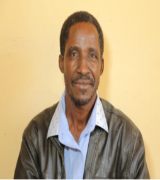
 Dr. Ngianga-Bakwin Kandala is Professor of Biostatistics in the Department of Epidemiology & Biostatistics at Western University in London, Ontario, where he advances statistical methods for global health research across interdisciplinary teams. He earned his PhD in Economics/Statistics from Ludwig‑Maximilian University of Munich in Germany, followed by a fellowship at the Université de Montréal in Canada. His prolific career spans leadership roles in the United Kingdom, South Africa, and Africa broadly, focusing on Bayesian modelling, evidence synthesis, and capacity-building in biostatistics for maternal and child health in low-resource settings. Dr. Kandala’s work shapes evidence-based global health policy and statistical training on the African continent.
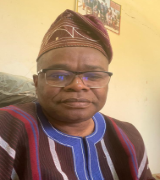
 Dr. Funa Moyo is a development researcher and Senior Lecturer at the National University of Science and Technology (NUST) in Bulawayo, Zimbabwe, where he coordinates MPhil and PhD programs within the Institute of Development Studies. His academic and professional work spans natural resource governance, disaster risk reduction, rural livelihoods, and sustainable development across southern Africa. With a PhD in Public and Development Management from the University of the Witwatersrand, Dr. Moyo has led and contributed to research partnerships with organizations such as UNDP, WFP, EU and UN Women, focusing on building resilience, promoting inclusive growth, water governance, and advancing equitable environmental and social policy frameworks in the region.
 Pr. Waliou Amoussa Hounkpatin is a nutrition and food-sciences researcher and professor at the Université d’Abomey-Calavi (UAC) in Cotonou, Benin, where he serves within the School of Nutrition & Food Sciences (ENSTA) in the Faculty of Agronomic Sciences. His work spans food security, micronutrient bioavailability, and the nutrition transition in West Africa—highlighted by studies such as the national review of Benin’s nutritional status and investigations of functional foods for iron-deficient pregnant women. Professor Amoussa Hounkpatin is also a pioneer in applying stable isotope techniques to evaluate the effectiveness of stunting-reduction programs, optimize nutrition interventions, and assess iron bioavailability in school canteens.
Massah Tarawalley is the Co-Founder and Executive Director of WeBridge Community Services, as well as a Ph.D. student at the University of Windsor's School of Social Work. Her research interests include Mental Health, War Trauma, Refugee Settlement, Social and Health Equity, Anti-racism and Oppression, Equity, Diversity and Inclusion (EDI), Decolonization, and Qualitative research. In addition to her academic and professional roles, Massah is recognized as a member of the advisory board of the Africa Institute at Western University in Canada. She is dedicated to promoting culturally responsive and accessible mental health support across Africa and within the diaspora.
Brianne O’Sullivan is a medical drone researcher and PhD candidate at Western University in the fields of public and global health, with experience leading research on medical delivery drone systems in Canada and across sub-Saharan Africa, with partners such as Transport Canada, Indigenous Services Canada, WHO, the United Nations Humanitarian Air Service (UNHAS/WFP), Drone Delivery Canada, and Zipline. Her doctoral work focuses on establishing foundational research on medical drone systems and assessing their impact on equitable and accessible healthcare in remote regions. Funded by multiple grants from the Government of Canada, she spent 5 months in Madagascar and Rwanda collecting data for four unique studies on medical delivery drone systems. In addition, Brie has spoken on behalf of Canada as a UN delegate in Geneva, Washington D.C., and Ottawa.
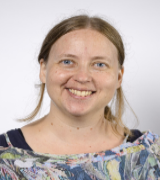 Dr. Yolanda Hedberg is a Professor of Chemistry and Canada Research Chair (Tier 2) in Corrosion Science at Western University, where her team investigates how material degradation impacts human health, the environment and society. With a PhD from KTH Royal Institute of Technology (Sweden) and prior post‑doctoral work at the Karolinska Institute, she researches metal‑material interactions in biological settings, such as implant corrosion and metal allergy mechanisms. Her work has secured major funding to train the next generation of corrosion scientists. Dr. Hedberg was also an inaugural recipient of the Western Research Excellence Award in 2023 for advancing equity, diversity and inclusion in STEM.
 Dr. Abdoulaye Samb is Professor of Physiology at the faculty of Medicine of University Cheikh Anta Diop (UCAD), where he also serves as a heard of the Department of Physiology and Director of the Doctoral School of Life, Health and Environment at the University of Cheikh Anta Diop in Dakar, Vice-Dean and Dean of the Faculty of Medicine, Pharmacy and Odonto-Stomatology. With extensive experience in vascular physiology and gestational diabetes, his recent work includes investigations of endothelial function in pregnancy and its link to insulin resistance and physical activity in sickle cell disease. He further leads the Réseau des Collèges des Écoles Doctorales in West Africa (RECED), promoting doctoral training and research governance across the region.
Pauline Akoth Omolo is an Evaluation Specialist, Project Management Professional, and Gender and Inclusion Analyst with over 15 years of experience in development, humanitarian programming, and academia. She is a PhD candidate in Project Planning and Management at the University of Nairobi. Pauline also is a part time lecturer and consults at the University of Nairobi, supporting national and international organizations including UNICEF, WFP, UN-OCHA, Save the Children, and TradeMark Africa. Her expertise spans end-line evaluations, programme design, policy reviews, GEDSI analyses, and strategy development across education, health, nutrition, and livelihoods sectors. A strong advocate for participatory and inclusive evaluation, Pauline integrates feminist and intersectional approaches in her work. She is an active member of the Evaluation Society of Kenya and mentors emerging evaluators, championing professionalization, ethical practice, and evidence-based learning for sustainable development across Africa.
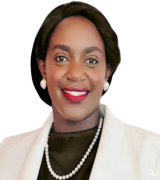 Dr. Margaret Mutumba is an innovator and global health scholar‑advocate serving as Director of the Frugal Biomedical Innovations programme at Western University. Holding a PhD in Public Health Sciences (University of Waterloo), an MPH (Imperial College London), and a BSc in Pharmacology (King’s College London), her decade-long career spans fertility and reproductive health in sub‑Saharan Africa. Dr. Mutumba founded the health‑tech startup MedAtlas, and serves as a consultant to the World Health Organization on human reproduction. Her achievements include key awards such as the WomenLift Health Leadership Fellowship and recognition from the Uganda Diaspora Network for her impact in health innovation.
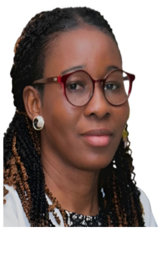 Prof. Millicent Awialie Akaateba is an Associate Professor of Urban Planning at Simon Diedong Dombo University of Business and Integrated Development Studies (SDD-UBIDS) in Wa, Ghana, and serves as Director of International Collaborations. She holds a PhD in Urban & Regional Planning from the Technical University of Berlin and an MSc in Transport Planning & the Environment from the University of Leeds. Her research focuses on informal urban transport, gender and mobility, hybrid land-governance systems, and sustainable urban development across sub-Saharan Africa. She publishes widely in peer-reviewed journals and has over 12 years of experience in university teaching and research. She is a DAAD Research Ambassador for Ghana, a corporate member of the Ghana Institute of Planning, and an affiliate researcher at the Habitat Unit of the Technical University of Berlin. Previously, she worked in private practice with Ablin Consult Engineers and Planners Ltd., collaborating on urban governance, transportation, land management, and pro-poor projects with organisations like DANIDA, the African Development Bank, ILO, and the National Road Safety Authority.
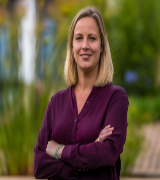 Dr. Phaedra Henley is Senior Advisor, Global Partnerships (Canada) and Associate Professor in the Center for One Health at the University of Global Health Equity (UGHE) in Rwanda. She is the former Inaugural Chair of the Center for One Health, where since 2016 she has led the development of One Health research, curriculum, and community engagement initiatives. Prior to joining UGHE, Dr. Henley sevrved as a Limited-Term Assistant Professor at Western University, Canada, where she contributed to the establishment of its graduate programs in Global Health. She holds a PhD in Pathology, a Master’s in Environment and Sustainability, and a Bachelor of Medical Sciences, all from Western University.
 Dr. Obidimma Ezezika is an Associate Professor in the Faculty of Health Sciences at Western University in London, Ontario, where he directs the Global Health and Innovation Lab. His research and practice focus on implementation science, bridging evidence and action to ensure innovations reach the communities that need them most. In addition to his academic role, Dr. Ezezika is the founder of the African Centre for Innovation and Leadership Development, an organization dedicated to promoting leadership and capacity development across Africa. He has received the University of Toronto Global Educator, D2L Innovation, and Next Einstein Awards, and is the author of Scaling Up Health Innovations in Africa.
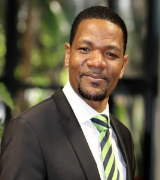 Dr. Richard Munang is an award-winning environmental and development policy leader recognized among the Top 50 Global Sustainability Thought Leaders. He holds a PhD in Environmental Change and Policy (University of Nottingham) and an Executive Certificate in Climate Change and Energy Policy (Harvard Kennedy School). At the UNEP, he has served as Head of Global Environment Monitoring Systems, Deputy Regional Director for Africa, and Climate Change Coordinator. His “One Health” work links climate, ecosystems, and livelihoods across 50 countries. He pioneered the Africa Adaptation Gap Reports and the Ecosystems-Based Adaptation for Food Security Assembly (EBAFOSA) and developed Africa’s first climate-entrepreneurship curriculum.
Dr. Melanie N. Katsivo is Associate Director (Programs & Partnerships) of The Africa Institute at Western University and International Partnerships Lead for the Frugal Biomedical Innovations program. She holds a PhD in Educational Communication & Technology (Health Promotion), an MA in Sociology (Health), and a BA in Education (Nutrition & Human Ecology). Dr. Katsivo’s work spans promoting equity, diversity, and inclusion in academia, designing global health education initiatives in Canada and Africa, and advancing research into climate change, sustainable livelihoods, and frugal biomedical innovation. She has led multiple international research-exchange programs for learners and early-career scholars, collaborated on cross-continental grants with African universities, and co-authored publications on inclusive program design and health systems strengthening, positioning her as a bridge between global research and local impact.
Dr. Saverio Stranges is Professor and Chair of the Department of Epidemiology & Biostatistics in the Schulich School of Medicine & Dentistry at Western University, and Director of the Africa Institute at Western University. He trained as a medical doctor at the University of Naples Federico II (Italy), completed specialty training in Preventive/Public Health Medicine, and earned a PhD in Epidemiology & Environmental Health at the State University of New York at Buffalo. His research focuses on chronic disease epidemiology and aging, including lifestyle, nutritional and psychosocial determinants of health, and he is also deeply committed to global health - especially tackling non‑communicable diseases in low‑resource settings.
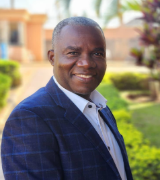 Dr. Gervais Ndayizeye is a distinguished management and higher education professional with over 20 years of experience in regional coordination, academic leadership, and financial management. As Senior Exchange Programs Officer at the Inter-University Council for East Africa (IUCEA), he leads initiatives promoting staff and student mobility across the region. He holds a PhD in Management Accounting, an MBA in Accounting, and a BBA in Accounting and Finance. Dr. Ndayizeye previously served as Vice Chancellor of Bujumbura International University and the International University of the Equator, Business Manager of Kira Hospital, and Managing Director of a reinsurance company, excelling in strategy, partnerships, and institutional development.
Natasha Fortin recently completed her Master of Health Sciences in Global Health Systems at Western University, where she worked with Reach One Touch One Ministries in Uganda and learned about community-driven approaches to geriatric care. She holds a Bachelor of Science (Honours) in Medical Sciences with a Certificate in Medical Humanities from Dalhousie University. During her time at Dalhousie, her research focused on telemedicine in stroke care and the gut microbiota’s connection to neurodegeneration. Natasha is passionate about global health equity and the impacts of climate change on health. Outside of her academic and research pursuits, Natasha volunteers as a youth curling coach.
Evelyn David is an MSc candidate at Western University in the field of Global Health Systems and an Administrative and Research Coordinator at ACCHO (African and Caribbean Council on HIV/AIDS in Ontario). After completing her BSc at McMaster University in Psychology, Neuroscience and Behaviour, she pursued a career in non-governmental organizations with a growing interest in health systems, equity and accessibility to care, particularly for marginalized communities. With experience supporting educational outreach, research initiatives, and community-based health support, Evelyn ensures that findings are translated into actionable strategies that strengthen programs and services for vulnerable communities throughout Ontario.
Sydney Lessard is a researcher and Master of Advanced Healthcare Practice candidate at Western University. She previously spent three months in Uganda conducting research on access to gender-affirming hormone therapy for trans women, in collaboration with the Infectious Diseases Institute as part of her Master of Global Health Systems. Currently, she is leading a scoping review project in collaboration with St. Joseph’s Healthcare London to develop a trauma-informed pathway connecting individuals experiencing homelessness and living with HIV to primary care at the hospital. Her work focuses on advancing equitable, patient-centered, and culturally safe healthcare for marginalized populations.
Conference Speakers