Programs
Contact Us
Western Academy for Advanced ResearchWestern Interdisciplinary Research Building
Western University
London, Ontario
N6A 3K7
wafar@uwo.ca
Connect with us today!


Arctic Sovereignty
Summary
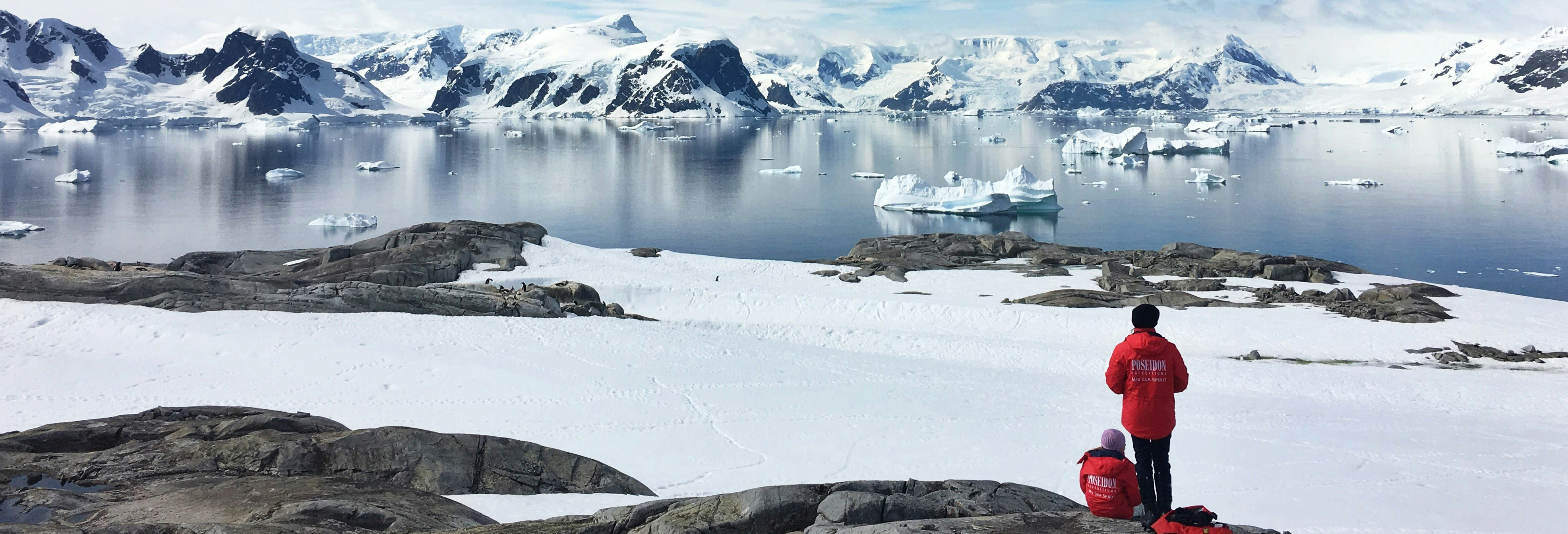
In 2026, WAFAR IGNITE awards will focus on Arctic Sovereignty as a model system for the study of global state and state-free sovereignty. Projects will be designed to focus on the Arctic while enabling trainees to incorporate other countries and situations into their research as comparators.
Undergraduate Internship Program
Undergraduates who receive a WAFAR IGNITE award will work alongside faculty mentors and receive a research-intensive peer-to-peer experience while undertaking novel research related to Arctic Sovereignty.
If you have questions, please contact wafar@uwo.ca
Background
The “Arctic,” or Circumpolar North, is sparsely populated—roughly 4–5 million people in total (depending on how the “Arctic” is defined: by latitude, tree line or national criteria).
The approximate breakdown by state/region (including both Arctic and sub-Arctic northern areas commonly treated as “Circumpolar North” in scholarship) includes:
- Russia: ~2–2.5 million in its northern regions (Murmansk, Arkhangelsk, Nenets, Yamalo Nenets, Chukotka, etc.). Indigenous peoples (Nenets, Chukchi, Evenki, Sakha, etc.) are a minority overall but locally dominant in some districts.
- Nordic states
- Norway (North Norway): ~480,000–500,000 (counties of Nordland, Troms og Finnmark), including a Sámi minority.
- Sweden (Norrland counties): ~900,000–1,000,000 in the northern half; Sámi form a small but politically important minority.
- Finland (Lapland region and adjacent northern areas): ~180,000–190,000; Sámi are a small share of the population but hold recognized Indigenous status.
- Iceland: ~380,000 total; the whole state is often included in “circumpolar” analyses, although it is not strictly Arctic by latitude.
- Greenland (Kingdom of Denmark): ~56,000–57,000; the population is predominantly Inuit (Kalaallit), making it one of the few majority Indigenous polities in the region.
- Faroe Islands (often included in North Atlantic/circumpolar studies): ~54,000 (non Indigenous Nordic population).
- Canada (Yukon, Northwest Territories, Nunavut, northern parts of provinces): roughly 200,000–240,000 in the “North,” with Inuit forming a majority in Nunavut and strong Indigenous presence (First Nations, Inuit, Métis) across the territories.
- United States (Alaska): ~730,000–740,000 total; Alaska Native peoples (Inuit/Yupik, Aleut, Athabaskan, Tlingit, etc.) are about 15–20% of the state’s population and a majority in many Arctic coastal and river communities.
Across the Circumpolar North, Indigenous peoples constitute a demographic minority in most states but a local majority in many Arctic and sub-Arctic communities. In Greenland in particular, they are the clear majority.
Population density is extremely low (often well under one person per km²), with a small number of urban nodes (e.g., Murmansk, Norilsk, Tromsø, Rovaniemi, Reykjavík, Anchorage, Whitehorse, Yellowknife, Iqaluit) and many very small, remote communities. Climate change, resource development and out-migration of youth are key demographic pressures shaping these populations.
In this context, what does “Arctic Sovereignty” mean? Arctic states together (Canada, U.S., Russia, Denmark/Greenland, Norway, Finland, Iceland, Sweden) assert control over territory, waters, airspace and resources in the Arctic.
Key Legal Frameworks
- UN Convention on the Law of the Sea (UNCLOS): defines territorial seas, Exclusive Economic Zones and rules for extending continental shelves.
- Arctic Council: a high-level intergovernmental forum (not a treaty body) that includes Indigenous organizations as Permanent Participants.
Major sovereignty issues in the Arctic
Individual projects will derive from these major Arctic Sovereignty issues:
- Maritime boundaries and extended continental shelves (e.g., overlapping claims to the seabed under the central Arctic Ocean, including the Lomonosov Ridge).
- Navigation routes:
- Northwest Passage (Canada vs. U.S. and others: internal waters vs. international strait).
- Northern Sea Route (Russia’s regulations vs. freedom of navigation arguments).
- Resources, mining and harvesting: oil, gas, minerals, fisheries, critical minerals.
- Security and militarization: increased military presence, dual-use infrastructure, and concerns heightened by great-power competition, especially Russia and NATO.
- Indigenous Peoples' rights and ownership:
- Major groups include Inuit (Inuit Nunaat, including Inuit Nunangat in Canada and Kalaallit in Greenland), Sámi, Aleut, Yupik, Chukchi, Nenets and others.
- Many Arctic Indigenous territories are within the borders of Arctic states but have distinct land claims, self-government arrangements and treaty rights.
- Indigenous organizations play a central role in Arctic politics: in the Arctic Council, Inuit Circumpolar Council (ICC), Sámi Council, RAIPON, etc., are Permanent Participants with near-equal voice to states (although do not have formal voting power).
- Climate change
- Transportation and Housing
- Health and lifespan
- Food security; and
- The intersections of many of these individual factors.