
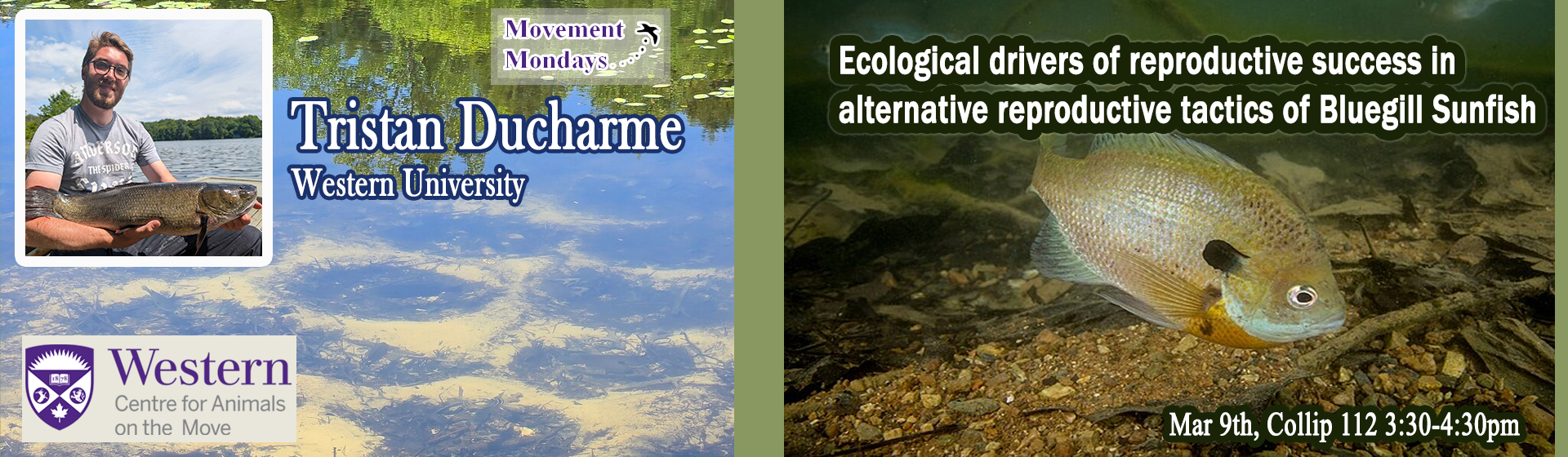
Summary: Within-sex differences in reproductive tactics are found in many species and likely evolve through sexual selection. Bluegill (Lepomis macrochirus) are characterized by alternative reproductive tactics (ARTs) with males adopting either “parental” or “cuckolder” tactics. Parentals delay maturation, investing in growth before competing for nesting sites within a breeding colony. Cuckolders instead mature precociously, initially adopting a sneaking tactic and later mimicking females to achieve fertilizations. Despite much research on ARTs in bluegill, the factors that affect the success of cuckolders within and across colonies are largely unknown. By combining behavioural recordings of spawning colonies and genetic paternity analysis, we were able to investigate the effect of water depth, temperature, nest location, substrate type, algal cover, nest diameter, cuckolder density, and turbidity on cuckolder reproductive success. We found a significant positive effect of turbidity, temperature and algal cover on the intrusion rate and density of cuckolders. These results have implications for conservation, where anthropogenically induced environmental change can alter the success of ARTs and their frequency and distribution.