
C. Gordon Winder Memorial Public Lecture
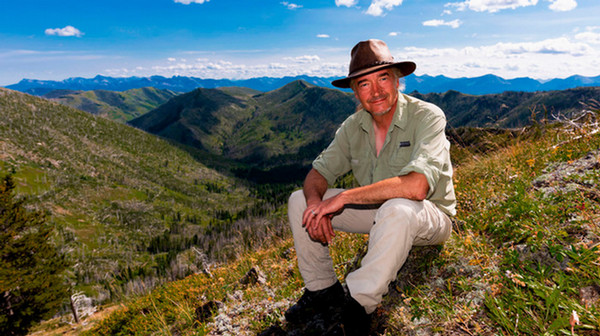
Dr. Murray Gingras
Professor & Dept. Chair, Earth & Atmospheric Sciences University of Alberta
Footprints to Facies: The Practical Power of Ichnology
When most people think of fossils, they imagine bones, shells, or dinosaur skeletons. But many of the most powerful clues to Earth’s past are not the remains of animals themselves, but the marks they left behind: footprints, trails, and burrows preserved in sediment. The study of these traces, known as ichnology, allows geologists and paleontologists to reconstruct ancient environments.
In this talk, I show how animal activity recorded in sediment can be used to read rocks much like a diary of past life and landscapes. Because these traces are preserved where animals lived and behaved, they provide reliable evidence of conditions such as water depth, oxygen levels, salinity, and sediment stability, often in rocks where body fossils are rare or absent. Using examples from shorelines, estuaries, river deltas, and ancient seafloors, I illustrate how patterns of burrowing and movement reveal whether environments were stressed or healthy, calm or energetic, stable or rapidly changing. These insights are not only important for understanding Earth’s history, but also for interpreting modern environmental change and managing natural resources.
By linking biology and geology, ichnology transforms rocks from static objects into vivid records of life and living, offering a surprisingly accessible and practical way to understand how Earth’s surface has evolved over hundreds of millions of years.
About this event
Date: Thursday, March 26, 2026
Time: 6pm
Location: Middlesex College, room 110