Curator-in-Residence
Current Events
Diaspora Climate
Exhibition: February 12 - March 5, 2026
Reception: Thursday, February 12 from 5:00 - 7:00pm
Curated by Yan Zhou, 2025–26 Curator-in-Residence
Sara Angelucci
Teresa Chan
Ma Yongfeng
Rehab Nazzal

Public Programs and Events:
Ink Marbling WorkshopLed by Teresa Chan
VA 206 / JLVAC, February 12, 12-2PM
Murmuration
Live Sound Performance
Teresa Chan and Jan Lai
February 12, 5:45–6:15 PM
artLAB Gallery
Participants: Rehab Nazal, Kirsty Robertson, Sheri Nault, Ma Yongfeng and Yan Zhou
February 23 from 1:15-3PM
In-person: VAC 249
Online: Zoom
Curator-in-Residence Program Description
The Department of Visual Arts at Western University is seeking applications from emerging to established curators, for a one-year Curator-in-Residence. The Department of Visual Arts supports numerous projects committed to social and environmental justice and would welcome the successful candidate’s input and/or collaboration in these areas. Applications from curators with connections to, or living in, the region are particularly encouraged.
The Curator-in-Residence will collaborate with our program in Museum and Curatorial Studies and our module in Social and Environmental Justice in the Arts. They will benefit from proximity and exchange with numerous research projects in the Department of Visual Arts, most especially the work of the Centre for Sustainable Curating (CSC) and the Onkwehonwe Research Environment (ORE). The Curator-in-Residence will collaborate with faculty and staff, mentor students, and develop a curatorial project focused on social and environmental justice. They will be invited to undertake community engagement and other outreach activities that could include (but are not limited to) talks, workshops, and studio visits. During the timeframe of the residency, the individual may pursue other opportunities at Western University, as available and relevant to their expertise. For example, individuals may apply to available teaching opportunities or take part in volunteer or other events on campus.
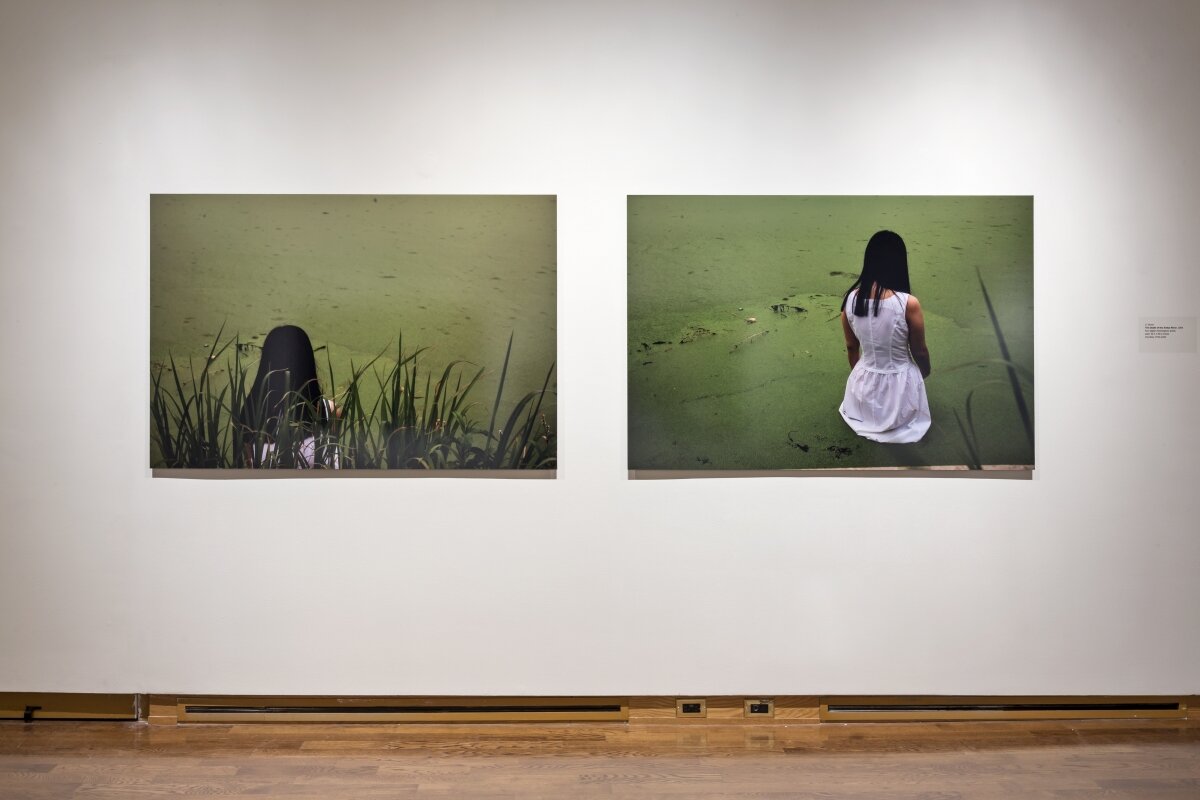
We invite proposals that utilize curatorial projects as instruments to stimulate new ideas, challenge existing perspectives, introduce innovative research topics, and critically assess current practices, all with the aim of promoting social and environmental justice through the Visual Arts. Special consideration will be given to projects that highlight overlooked knowledge areas or amplify diverse and multifaceted voices. The successful candidate will demonstrate a strong dedication to equity, diversity, and inclusion within their curatorial endeavors, actively engaging with anti-oppressive and decolonized frameworks.
The Curator-in-Residence will have access to a shared office space and equipment, staff support, and other resources at Western University, such as use of the library and the Centre for Teaching and Learning. The residency will include periodic activities that intersect with coursework and departmental events.
The residency will be situated in the Department of Visual Arts for a period of 8 to 12 months beginning August 1, 2025 (negotiable). The stipend for the residency is $50,000 (inclusive of taxes) regardless of the length of the residency, and is intended to cover support materials, travel, accommodation, curator fees and costs related to the residency, although additional funds can be applied for through the Department. There is a limited budget available to support an exhibition.
The Department of Visual Arts offers programs in Art History, Museum and Curatorial Studies, and Studio Art, both at the undergraduate and graduate levels. We have strengths in digital media, photography, painting, drawing, printmaking, sound, sculpture, and installation. Department facilities include the ArtLAB Gallery, the Cohen Explorations Lab and Cohen Commons, the Centre for Sustainable Curating, and the Onkwehonwe Research Environment, as well as studio facilities including woodshop, sound studio, printmaking studio, painting studio, dark room, and black box media lab. The Department also supports an Indigenous Artist-in-Residence.
Local Context
Western University is located on the traditional territories of the Anishinaabek, Haudenosaunee, Lūnaapéewak, and Chonnonton Nations, on lands connected with London Township and Sombra Treaties of 1796 and the Dish with One Spoon Covenant Wampum. With this, we acknowledge and respect the longstanding relationships that Indigenous Nations have to this land, as they are the original caretakers. We acknowledge historical and ongoing injustices that Indigenous Peoples (First Nations, Métis and Inuit) endure in Canada, and we accept responsibility as a public institution to contribute toward revealing and correcting miseducation as well as renewing respectful relationships with Indigenous communities through our teaching, research and community service.
The Department of Visual Arts is located next to the Deshkan Ziibing, also known as the Thames or Antler River. This culturally and ecologically significant river reminds us of our responsibilities to the land and Indigenous Peoples, and offers meaningful grounding and inspiration to many students, staff and faculty.
London has a vivid artistic scene, and we collaborate on a regular basis with the McIntosh Gallery, also located on campus, Embassy Cultural House, Forest City Gallery, Museum London, and Museum of Ontario Archaeology.
Call For Applications: Curator-in-Residence in Social and Environmental Justice in the Arts
Applications for 2025/2026 due May 31, 2025
Call for Applications: Curator in Residence 2025/2026 (PDF)
Current Curator-in-Residence
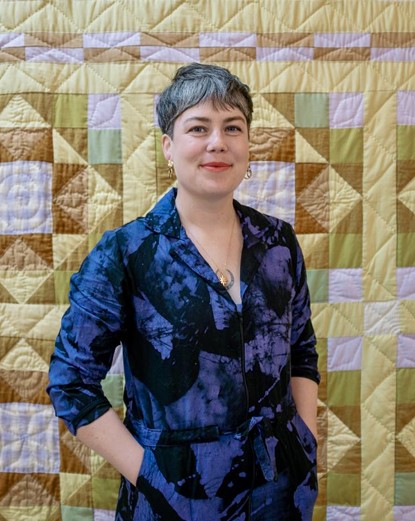
2025/26 Yan Zhou
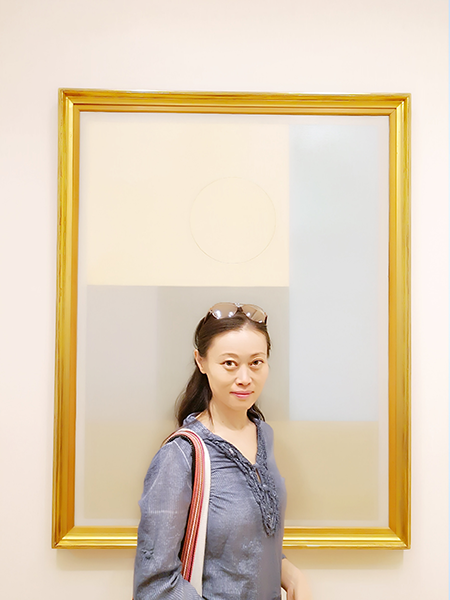
"As a Chinese diaspora who has lived in Canada for 16 years, I have dreamed, lost, and searched between climates, homes, languages, and cultures. I grew up and lived in the ancient capital city of Xi’an in Northwestern China for 39 years, deeply shaped by the people, language, and cultures of my homeland. As a curator and scholar, my work has focused on cross-cultural art communication between Asia and Canada."
"Recently, I have become more devoted to socially engaged art and art activism, diaspora cultures, community building, collective healing, and social and environmental justice. For me, curating is essentially a practice of nurturing mutual care and growth, resisting the violence of patriarchal culture and all abusive powers, and breaking down hierarchies."
"My ongoing work addresses topics such as diaspora and climates, retreat from the neoliberal urbanism art, mental health, and collective healing. I wrote a book on plant transmission and cultural exchange between China and the West from the 16th century to the early 19th century. I have been patiently researching plants, contemporary art, and activist gardening."
"Beyond my scholarly and curatorial work, I write and translate poetry. I dare to be a warrior-critic of culture, art, literature, and politics. I am the mother of a lovely daughter, and a good cook who occasionally fails in the art of cooking."
"I am a dispersed seed, a wild grass that claims no authority or status. I embrace and sing to the world as a rebelling poet. I embrace you—and everyone and every being—as a friend, feminist, and activist."
Upcoming Exhibitions and Events
Diaspora Climate
Exhibition: February 12 - March 5, 2026
Reception: Thursday, February 12 from 5:00 - 7:00pm
Curated by Yan Zhou, 2025–26 Curator-in-Residence
Sara Angelucci
Teresa Chan
Ma Yongfeng
Rehab Nazzal
Public Programs and Events:
- Ink Marbling Workshop
Led by Teresa Chan
VA 206 / JLVAC, February 12, 12-2PM -
Murmuration
Live Sound Performance
Teresa Chan and Jan Lai
February 12, 5:45–6:15 PM
artLAB Gallery - Screening and Discussion: Rehab Nazal's documentary film Vibrations from Gaza
Participants: Rehab Nazal, Kirsty Robertson, Sheri Nault, Ma Yongfeng and Yan Zhou
February 23 from 1:15-3PM
In-person: VAC 249
Online: Zoom
Curatorial Statement
Diaspora Climate brings together diverse climates, cultures, languages, histories, memories, feelings, perspectives, and connections through personal experiences and artistic expressions, linking an affinity with both natural environments and cultural dispositions. Human beings are as sensitive to displacement and transplantation as plants and animals. Diaspora Climate signals the ethical and emotional bonds diasporic people hold with the climatic pressures affecting them both “here” and “there”, including struggles, suffering, and the shared fate of the world and planet Earth.
The exhibition features work by four artists: Sara Angelucci (Toronto), Teresa Chan (Toronto), Ma Yongfeng (Berlin), and Rehab Nazzal (occupied West Bank, Palestine). Their works respond to relationships with particular places, cultures, histories, climates, and environments, while also addressing ongoing afflictions of social and environmental violence, driven by brutal global capitalism, colonialism, and arbitrary state apparatuses. These forces bring wars, relentless exploitation, and the dispossession of living space and life for both nature and people, intensifying the Climate Crisis. The voices and gestures that artists share through their works are ripples of Global Diaspora Solidarity.
The Japanese word fūdo (Chinese and Japanese Kanji: 風土) is translated as “climate,” yet its meaning extends beyond meteorological conditions. It signifies the inseparable and mutually formative relationship among seasons, climate, nature, and modes of human life and sensibility in a particular place, culture, and its history. A related Chinese saying, 一方水土養一方人, expresses a similar idea: that the soil and waters of a given land nurture the distinctive dispositions of its people. In this sense, fūdo (風土氣候) is comparable to the ancient Greek concept of chōrographia, which refers to the description or mapping of a specific region or country, emphasizing local features, history, natural history, and culture, in contrast to geography, which sought to describe the world as a whole. Chōrographia suggests that the topography, natural environment, and social and political structures of a particular area are interconnected.[1] fūdo (風土氣候) is still embodied in East Asian perceptions of the world and in their aesthetic–climatic sensibilities, whereas in the modern Western world, a scientific divide tends to separate and dominate human relationships with nature.
When the modern Japanese philosopher Tetsurō Watsuji (1889–1960) brought the traditional East Asian concept of fūdo (風土) into dialogue with Western scientific notions of “climate” and “environment,” he understood climate not merely as a natural phenomenon. Rather, he argued that human existence, history, and climate are inseparable. In a climatic register, humans apprehend themselves and shape both individual and collective sensibilities. Therefore, social, cultural, and political transformation depends upon the transformation of climatic culture; as it changes, the customs and habits of a people change accordingly (移風易俗). Furthermore, Watsuji suggests that diaspora, those who have left and become distanced from their homeland, and the “other,” who does not fully belong to a given climatic culture, may grasp a climate and fūdo (風土) in a uniquely profound and nuanced way, one that is often more reflective and thought-provoking.[2]
Diaspora holds an acute and incisive political position from which to question and reinterpret the relationship between climate and culture. It activates each individual as a micro-center, responsible for addressing issues of climate change and for pursuing climate and social justice.
Diaspora refuses to be fixed to a single position. Carried on in migration and drifting, diaspora lives simultaneously inside and outside of “home” and “homelessness,” being here (displaced and adopted) and there (exiled and distanced). As writer Yōko Tawada, who writes in both Japanese and German, argues, diaspora refuses to be integrated into a dominant language and culture and denied parts of themselves, such as accent and one’s history and cultural memory. Meanwhile, diaspora also flies from the cocoon of the mother tongue and journeys into adventurous encounters with other tongues, creating new communities rather than being bound to predetermined communities or fixed identities (2025).[3]
We cannot talk about climate change or social and environmental justice without confronting the ongoing genocide and ecocide in Palestine, the environmental disaster following the Russian invasion of Ukraine, and the erasure of Indigenous communities and forests in the Amazon and elsewhere—all exemplify the devastating consequences of global environmental and social injustices.[4] In particular, I believe, we cannot talk about anything, any change, and any future, if we avoid looking at and talking about Palestine: what has been happening to its people and land under an increasingly brutal Apartheid system of genocide, ecocide, siege and elimination of eco-human life and culture, imposed by a fully techno-weaponized modern state.
Once a terrible world is born through the deprivation, exploitation, and killing of one group of people by another—as in Nazism, colonialism, Apartheid, or dictatorship—its psyche, ideology, and whole mechanism continue to evolve and contaminate the world. It therefore becomes the obligation of everyone, and particularly of critical and creative minds, to resist it and to fight for justice and the rights of every being, human and non-human, with unwavering attention and sustained effort.
We should rethink our dear and precious life and world from the position of “bare life,” which designates the victims of the violence of sovereign power who are deprived of their rights to live as full human beings in every sense.[5] The deprived, abused, and threatened cherish the precious life more deeply; they preserve and shine the light of dignity of life more radiantly; and they hold tight to the faith in justice more adamantly. They are more human, and more humanly, than the abusers and those who support, tolerate, or comply with them. They fight for life with all their means; they fight for life with life itself. They fight for humanity. The “qualified life,” secured by killing others and by imposing segregation and deprivation, is not true life. Instead, it is soulless slavery that abandons humanity and being human together with other human and nonhuman beings.
Yan Zhou
January 2026
Introduction of artists and exhibiting works
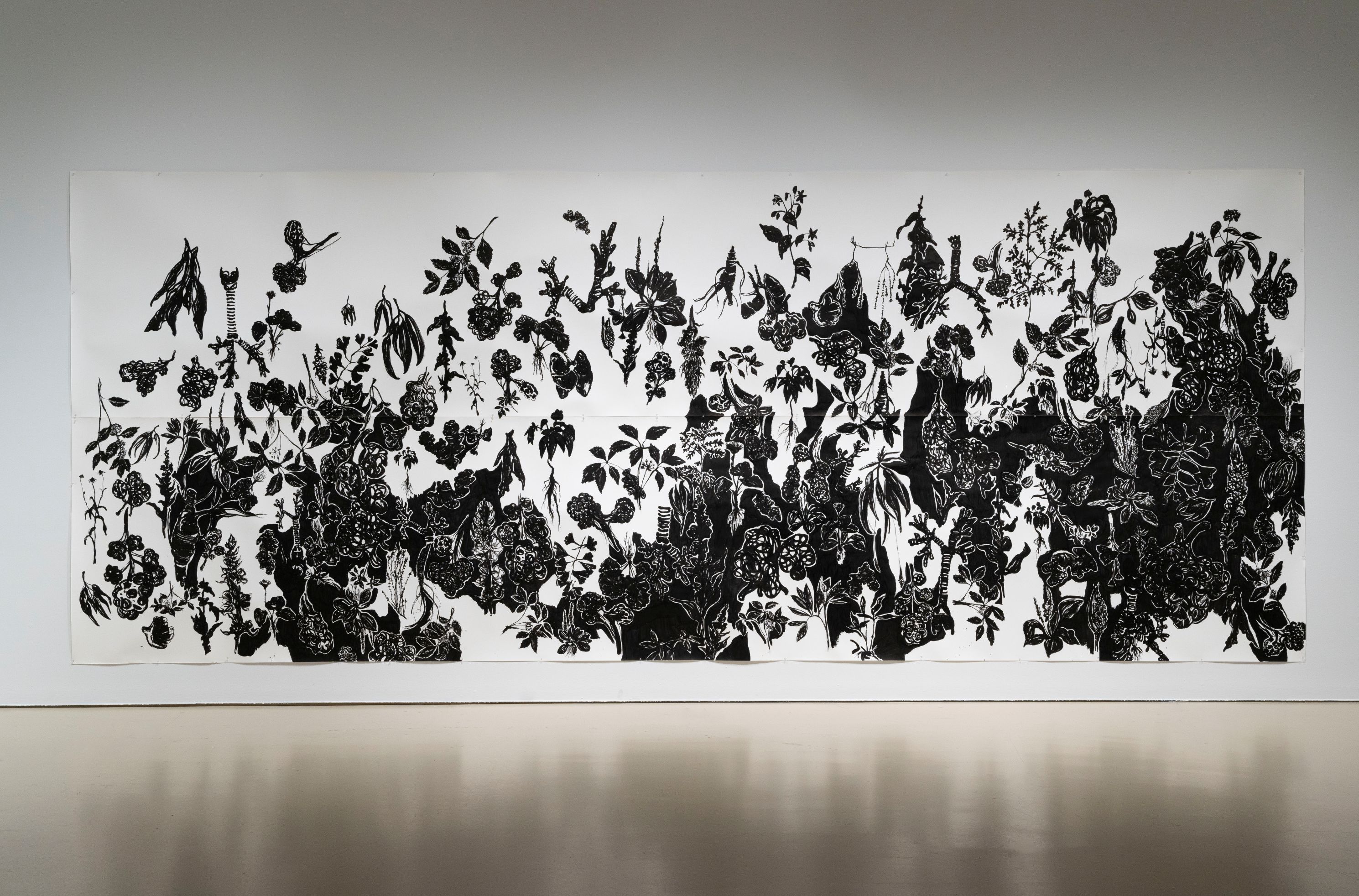
As a second-generation Italian immigrant, Tkaronto/Toronto-based artist Sara Angelucci (she/her) has created photography, video, and audio projects that explore repressed narratives and meaning embedded in the conventions of photography. Often using archival images as source and inspiration, her projects have revealed broader cultural and historical contexts that photographs hold, teasing out new ways of looking. In addition to working with archival images, Angelucci has been inspired by the themes they reveal. While evolving over time, Angelucci’s work remains coherent in its sustained attention to immigrant memories; the migration of species; mutually reliant relationships with the natural world; and the healing forces of nature.
For this exhibition, Angelucci created two new works, Neither Here nor There and Family Harvest. Neither Here nor There features a pomegranate scanned in the artist’s ancestral village of Montottone (Le Marche, Italy), paired with a wild apple tree infested with LDD moth caterpillars, scanned in the Pretty River Valley in Ontario. As neither fruit is native to those regions, the work gestures toward traces of “human and plant diasporas” (in her own words) across continents and time, and their displacements between here and there—Italy and Turtle Island (the land currently called Canada), past and present.
In Family Harvest, Angelucci embeds a photograph of her grandparents, uncles, and aunt harvesting wheat within a scan of wheat and grape leaves, their dietary staples. Angelucci’s family were sharecroppers, literally earning their daily bread from what they could grow on land owned by a seigneur. Together, these images point to a long and complex relationship between plants and humans, governed by the need to move to other lands (for many reasons), and to the looming impact that climate change will have on the botanical world and humans.
READ:
A botanical diaspora
By Sara Angelucci
MORE:
https://www.sara-angelucci.ca/

Sara Angelucci. Neither Here nor There. Photography on mural paper. 2025.
Sara Angelucci. Family Harvest. Photography on mural paper. 2025.
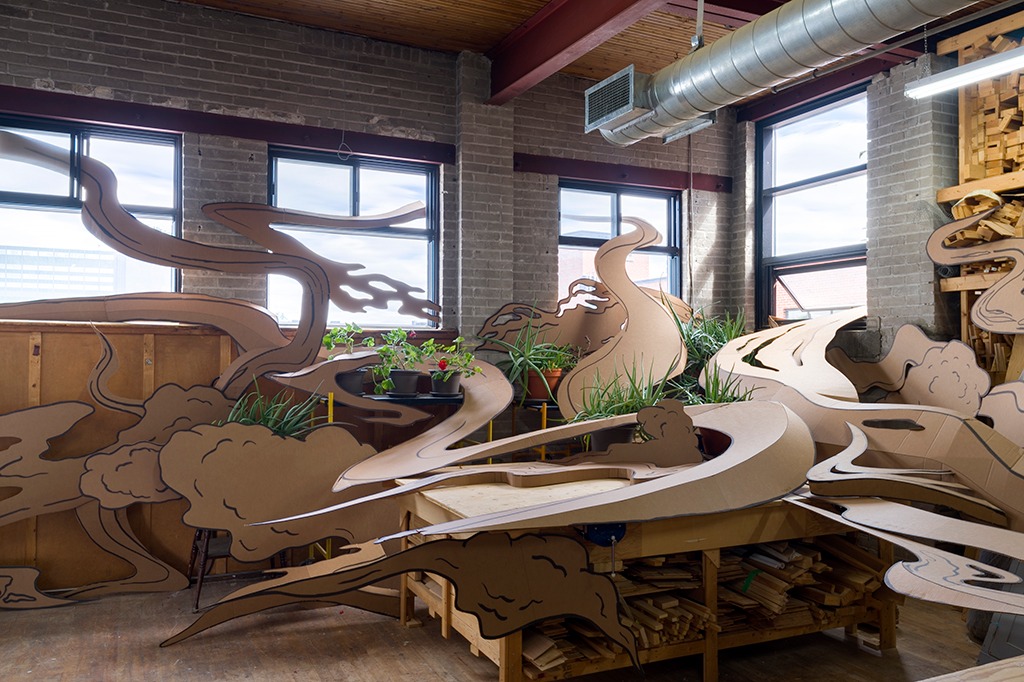
Teresa Chan (she/her) is a multidisciplinary artist and award-winning children’s book author with an educational background in ecology and anthropology. As a Hong Kong diaspora, Chan has lived and worked in Tkaronto/Toronto since 2022. Deeply influenced by Japanese Buddhist traditions, Chinese Taoist thought, Indigenous cultures in Taiwan, and the multicultural milieu of Hong Kong, her practice is imbued with East Asian intuitions of the interconnectedness of all beings and life cycles in the universe, cross-cultural sensibilities, and multispecies perspectives. In her art practice, Chan gently engages with life and nature, memories and cultures, through intimate attunement to local landscapes, soundscapes, and weatherscapes. Her “ephemeral” works function as both therapeutic practice and art activism, linking spiritual cultivation, cultural identity, and ecopolitical positioning.
In A Murmuration of Diaspora (呢喃:驪歌), Chan created a body of work that metaphorizes and trans-metaphorizes the flight of common starlings (Sturnus vulgaris), to reflect on migration, habitat, displacement, and adaption of humans and non-human worlds. The project comprises the photography series Murmurer; ink drawing and trace-making works The Murmurs and The Ripples; installation pieces Murmurer and Origami Birds; as well as the interactive installation Make a Wish. In addition, the artist will hold an ink-marbling workshop based on the Japanese Buddhist monks’ tradition of suminagashi (meaning “ink floating”), inviting participants to meditate through embodied interaction with nature and time.
READ:
A Murmuration of Diaspora
By Teresa Chan
Murmuration - Live Sound Performance
By Teresa Chan and Jan Lai
MORE:
www.7eresa.com

Teresa Chan. The Ripples. Ink on paper, 10'' x 14''. 2025.

Teresa Chan. Murmurer #1. Photo on paper, 8'' x 12''. 2025.
Ma Yongfeng is a Chinese diaspora artist, filmmaker, and curator based in Berlin, whose recent work focus on politically engaged art practice inspired by non-human-centered perspectives and anarchical resistance. In his essay film Poetics of Mycelium (2025), Ma explores mycelial eco-political planetary imaginaries, weaving poetic elegies of exile to bring light into sprouting, resilient, and decentralized life cycles and futures.
READ:
Mycelium
By Ma Yongfeng
Poetics of Mycelium
By Ma Yongfeng
MORE:
https://www.mayongfeng.com/

Ma Yongfeng. Poetics of Mycelium. Essay film, 4K, 16:9, 42:05 mins. Still images. 2025.
Rehab Nazzal is a Palestinian Canadian multidisciplinary artist, activist, and art educator currently based in the occupied West Bank, Palestine. She was born and grew up in Jenin, northern Palestine, where her family have lived on their land with orange orchards and olive groves, long before the establishment of the state of Israel.
Nazzal left her home in 1985 to pursue her studies at Damascus University in Syria and later migrated to Turtle Island (Canada). She was exiled and denied the right to return to her homeland for more than twenty years by Israeli authorities, until 2005. In Canada, she earned a PhD from Western University, an MFA from Ryerson University, and a BFA from the University of Ottawa. She has taught at Simon Fraser University in Vancouver, Western University in London, Ontario, and the Ottawa School of Art. Since 2018, Nazzal has taught at Dar al-Kalima University College of Arts and Culture in Bethlehem, Palestine.
Living under Israeli settler colonialism and through what she described as “incremental genocide” (2018) in her homeland,1 Nazzal uses her camera as a witness and artistic weapon of resistance, to document and reveal the daily suffering and struggles of people, land, and non-human life in occupied, colonized, and segregated territories. Her extensive body of multimedia work, including video, film, photography, sound, and installation, is grounded in intensive field research and produced on-the-ground investigations, sometimes under life-threatening circumstances.2 These works expose the unimaginable brutality of apartheid settler colonialism and genocide, the hardships of Palestinian daily life, and the enduring resilience, ṣumūd (steadfastness), and resistance of the Palestinian people.
The exhibited work, Looking Back, Looking Ahead, driving from Ramallah to Bethlehem, Driving from Ramallah to Jenin (video, 2013) is part of Nazzal’s decade-long multimedia project Driving in Palestine. Created by the artist mainly from moving vehicles, the project captures views of the apartheid wall, military checkpoints, gates, fences, watchtowers, roadblocks, and systems of surveillance that have jeopardized Palestinian daily life for more than seventy years. The work reveals regimes of segregation, confinement, surveillance, as well as restrictions on freedom of movement that have transformed the occupied West Bank into an open-air prison. The work exposes the ongoing dispossession of the Palestinians and the shrinking of their spaces, alongside an altered landscape and wounded nature imposed by the Israeli state. Its mechanisms have also been adopted from previous apartheid and settler colonial regimes and replicated by other authoritarian powers.
In the documentary Canada Park (2015), Nazzal discloses the complicity of Canada in the settler colonial project in Palestine, focusing on three villages: Imwas: Yalu, and Beit Nuba, occupied in 1967 in the West Bank, their 10,000 residents were forcibly displaced, and their homes were leveled to the ground. In the late 1970s Canada funded the establishment of an exclusively Israeli recreational park over the ruins of the villages, called “Canada Park,” in violation of international law.
For the Palestinian indigenous people, plants and trees are not only life-sustaining and nature-preserving; the earth and its beings also bear wounds and trauma shared with human life. Yet nature and the land always renew and heal. Shot during the COVID-19 Pandemic, Healing Moments (video, 2023) captures flowering, breathing, and rejuvenated nature, with the sounds of wind and water, the chirping of insects, the songs of birds, and the rustling of leaves on the bruised Palestinian land and its organic environment. These images and sounds of plants, people, and the earth resist violence and elimination, preserving an indestructible strength for life, growth, healing, hope, and revival.
In Nazzal’s award-winning documentary film Vibrations from Gaza (2023), Deaf children in Gaza, Palestine, share their experiences of Israel’s siege and frequent bombardment that shake the air and the ground and destroy buildings, as well as the constant threat of drones, through their bodies, facial expressions, and sign languages. The contrast between the liveliness and loveliness of the Deaf children and the atrocities of their living world under Israel’s bombardment and sonic weaponry and drones, is deeply heart-wrenching.
READ:
Rehab Nazzal: Driving in Palestine
By Stefan St-Laurent
Rehab Nazal. Destruction Caused by the Israeli Occupation Forces Bulldozers in the Eastern Neighbourhood of Jenin, August 2024. Photograph.

Rehab Nazal. Healing Moments. Video, 8:21 minutes. Still images. 2023.
Notes
[1] The ancient Greek term chōrographia (or chorography) derives from khōros, meaning place or region, and graphia, meaning writing or drawing. The term appears in the work Geography by the ancient Greek geographer Strabo and later reemerged during the Renaissance, notably in Athanasius Kircher’s Mundus subterraneus. Interest in this form of study continued into the late eighteenth century, before the emergence of modern scientific disciplines.
Strabo. Geography. Loeb Classical Library. Accessed via Internet Archive. https://archive.org/details/Strabo08Geography17AndIndex
Kircher, Athanasius. 1662. Mundus subterraneus. Amstelodami: Apud Joannem Janssonium à Waesberge & filios.
Buonanno, Rossella. 2014. The Stars of Galileo Galilei and the Universal Knowledge of Athanasius Kircher. Cham: Springer International Publishing.
[2] Watsuji, Tetsurō. 1961. A Climate: A Philosophical Study. Translated by Geoffrey Bownas. Tokyo: Printing Bureau, Japanese Government. Accessed via Internet Archive. https://archive.org/details/climatephilosoph0000wats_g9l6
Watsuji, Tetsurō. 2022. Intro / Climate & Culture. Introduced by Nathan Hohipuha. YouTube video, December 17, 2022. https://www.youtube.com/watch?v=AIxBjWtu-fU&t=13s
[3] Tawada, Yōko. 2025. Exophony: Voyages Outside the Mother Tongue. Translated by Lisa Hofmann-Kuroda. New York: New Directions Publishing Corporation.
[4] Dinc, Pinar, and Necmettin Türk. 2025. “Roots of Destruction: Exploring the Genocide-Ecocide Nexus through the Destruction of Olive Trees in Occupied Palestine and Rojava.” The International Journal of Human Rights, August, 1–25. https://doi.org/10.1080/13642987.2025.2541756.
IMEU (Institute for Middle East Understanding). 2022. “Fact Sheet: Israel’s Environmental Apartheid in Palestine.” November 3, 2022. https://imeu.org/resources/resources/fact-sheet-israels-environmental-apartheid-in-palestine/126.
Joseph, Lesley. 2025. “This Is What Ecocide Looks Like: Reflections on Israel’s War on the Environment in Gaza.” Journal of Palestine Studies 54 (2): 82–87. https://doi.org/10.1080/0377919X.2025.2520728
Forensic Architecture. n.d. “Environmental Violence.” Accessed January 10, 2026. https://forensic-architecture.org/category/environmental-violence
[5] Agamben, Giorgio. 1998. Homo Sacer: Sovereign Power and Bare Life. Stanford, Calif: Stanford University Press.
[6] Nazzal, Rehab. 2018. “Representation of Settler Colonial Violence in Palestine: A Thesis in Support of the Multi-Media Exhibition Choreographies of Resistance.” ProQuest Dissertations & Theses Global.
[7] Nazzal was intentionally shot with a live bullet by an Israeli sniper on December 11, 2015, while she was documenting a military “Skunk” truck spraying laboratory-made sewage onto Palestinian houses, hotels, and shops in Bethlehem. She was detained and interrogated at checkpoints for carrying a camera, and her cameras were nearly confiscated by Israeli soldiers (Nazzal 2018).
Past Events
"Climate Diaspora: Refugees and Refuges"
Thursday, December 4 | 11:30am - 1:00pm
Room: VAC 247
John Labatt Visual Arts Centre, Western University
In a world of growing refugees and shrinking refuges, how might we form cross-national, cross-cultural, and cross-species relations for environmental solidarity? Join us to engage in these questions through:
- Wan Qing. Open Your Mouth When The Meal Come. Film. 2022.
- Aaron Ambroso. Climate Migration: Displacement, Travel, Home(2023-4). Exhibition. The Houston Climate Justice Museum.
- Write and draw your postcards for the Ecological Post Office for Climate Justice program. The Houston Climate Justice Museum & Diaspora Climate.
Climate Diaspora: Refugees and Refuges
We live in a world of growing refugees and shrinking refuges. As humans and species are increasingly displaced, spaces for rejuvination and regeneration are also shrinking. This event tracks various kinds of movements within these patchwork spaces, from pipelines to seeds to water, through which we might reimagine our worlds. It prompts us to ask: How might we form cross-national, cross-cultural, and cross-species relations for environmental solidarity?
Join us to explore these themes through Wan Qing's short film "Open Your Mouth When The Meal Come," and the exhibit project Climate Migration: Displacement, Travel, Home (2023-4), organized by the Houston Climate Justice Museum. Participate in the Ecological Post Office for Climate Justice program, writing and drawing your postcard using a template specially designed and made by the Houston Climate Justice Museum, in collaboration with Diaspora Climate.
Open Your Mouth When the Meal Come (2022). Film. Duration: 11’42’’.
Restless in the abstraction and mystery of modern life, we hold chopsticks in one hand and the Internet in the other, through these mediums, the mouth chews the substance, the eyes absorb the knowledge and entertainment, the body fights inside, the brain and stomach compete for digestive energy, and we feel exhausted by the end of a meal... The bodies of food do not come from around, their souls want home — What we eat is not a meal, but information.
Wan Qing (b. 1993, Chongqing) has worked in Guangzhou since 2011. Her recent art practice focuses on interactions with the environment, subjects, and flows of energy. Wan is also a member of Yi Qi Lian Gong (Energy Waving Collective) and Theatre 44, an initiator of limilink, a caretaker of Qiantai osf, and a practitioner of Five Element Acupuncture. Life, creation, and collective practice continuously shape her art and activism practice.

Climate Migrations exhibition is a public art and public history project around the subject of climate change fueled migration, designed to connect artists, scholars, activists, and communities to explore/interrogate/imagine/expose the connection between climate change and displacement, travel, and making new homes.
The Houston Climate Justice Museum focuses on the communities most impacted by a warming planet and tells stories to create opportunities for more equal well-being within a world of environmental catastrophe. Houston Climate Justice Museum promotes climate and environmental justice to rethink museums at every level. The museum is a platform for marginalized voices, and in solidarity with climate survivors, Indigenous land rights and Land Back movements, resisting the capitalist culture of extraction, and practicing sustainability.
Also, in collaboration with the Houston Climate Justice Museum & Diaspora Climate, we invite you to write and draw your postcards for the Ecological Post Office for Climate Justice program. You can find a printed copy in the event, or download a copy from the link: https://www.climatejusticemuseum.org/ecological-post-office

Climate Diaspora: Refugees and Refuges event is part of “Diaspora Climate” organized by Yan Zhou, Curator-in-Residence in the Department of Visual Arts. In this project, we explore the ecology of the diverse cultures and histories of diaspora communities, foregrounding their role as caretakers and warriors, upholding justice and solidarity with both local and home countries in their shared struggles against environmental, social, and political injustice wherever they live and prosper.
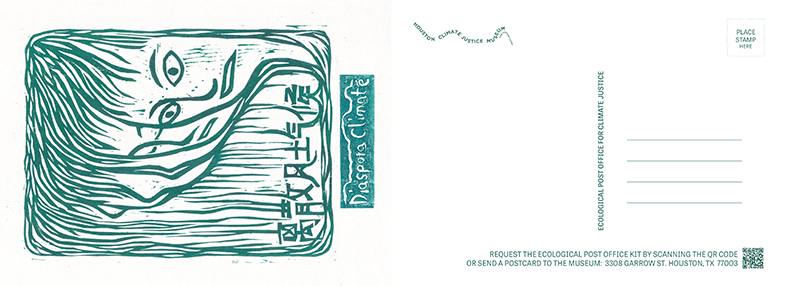
Interactive. Write and draw your postcards for the Ecological Post Office for Climate Justice program. The Houston Climate Justice Museum & Diaspora Climate.
We invite attendees and others to participate in the Ecological Post Office for Climate Justice postcard-creating and sharing initiative, a joint project of the Houston Climate Justice Museum and the Diaspora Climate curator-in-residence program. Attendees may pick up printed postcards and write or draw their own at the event site, or they may download and print postcards to create their messages. Please send your postcards to us; we will display them in various formats at next year’s Diaspora Climate exhibition and at the Houston Climate Justice Museum.
https://www.climatejusticemuseum.org/ecological-post-office
You can send your postcard to:
Yan Zhou
Diaspora Climate—Curator-in-residence
Department of Visual Arts
John Labatt Visual Arts Centre
London, Ontario, Canada, N6A 5B7
Or:
Ecological Post Office for Climate Justice
Houston Climate Justice Museum
3308 Garrow St.
Houston, TX, USA. 77003
https://www.climatejusticemuseum.org/ecological-post-office
Support by: Alena Robin, Eeva Siivonen, Liza Eurich, Cindi Talbot, Dickson Bou, and others.
Logo Design: Lilin
Poster design: Stefania Andreea Dragalin
"Mid-Autumn (Moon) Festival"
Wednesday, September 17th | 4:00pm - 6:30pm
Digital Creativity Lab (VAC 137)
John Labatt Visual Arts Centre, Western University
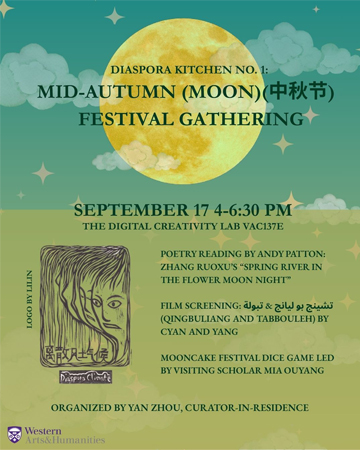
This event is part of “Diaspora Climate” organized by Yan Zhou, Curator-in-Residence in Social and Environmental Justice in the Arts at the Department of Visual Arts.
In this residency project, we explore the ecology of the diverse cultures and histories of diaspora communities, foregrounding their role as caretakers and warriors, upholding justice and solidarity with both local and home countries in their shared struggles against environmental, social, and political injustice wherever they live and prosper.
As part of the community engagement components, the “Diaspora Kitchen” program organizes events that bring together local and international communities to share food, stories, memories, and works. In the first “Diaspora Kitchen” event, we will celebrate the Mid-Autumn (Moon) Festival.
The event will include three activities:
1: Mia Ouyang, a mathematician and visiting scholar at Western University, will lead the mooncake sharing and moon cake dice game (The Moon Festival Bóbǐng Game). This local tradition is connected to the complex history of Taiwan and mainland China, as well as to the ancient Chinese civil service examination system.
2: Andy Patton, a painter and a poet, who is an alumnus of Visual Arts at Western, will read the poem “Spring River in the Flower Moon Night” by Tang Dynasty poet Zhang Ruoxu. Andy said this poem is “the one poem I would save from the universal wreckage if all of China’s great poetry was being destroyed.”
3: We will screen a short film, titled “Qingbuliang & Tabbouleh” (تشينج بو ليانج & تبولة).: In the film, displaced Syrian children and their families in the Bekaa Valley, Lebanon and migrant workers’ children in Haikou City, Hainan Island, China, met online and shared their favorite food: the Hainan Island fruit bowl “qingbuliang” and the Middle Eastern salad “tabbouleh”, during the 4th Children’s Art Festival of Kindergarten Without Walls in Haikou, China in August 2025. During the screening, we will also share “Qingbuliang & Tabbouleh”.
View images from the event here.