Global Sustainability
Written by: Kate Klassen, Scholar Writer, 1st Year Integrated Science
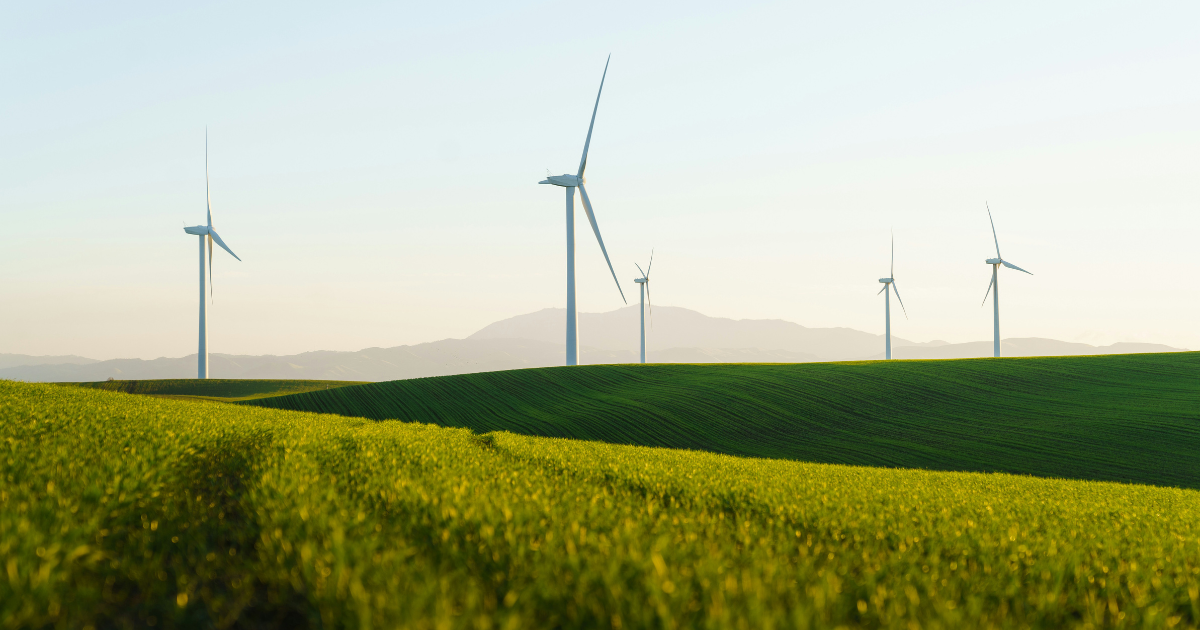
Photo by: Zac Wolff on Unsplash
Global sustainability refers to an approach to development that ensures social, economic, and environmental needs are met, while also preserving the planet’s capacity to support future generations. At its core, the concept focuses on creating conditions in which society and the health of the Earth’s ecosystems can thrive together, rather than advancing one at each other’s expense (Brundtland & World Commission on Environment and Development, 1987).
The idea gained international recognition through the 1987 Brundtland Report, Our Common Future, which emphasized that sustainable development requires balancing environmental protection, economic opportunity, and social equity (Brundtland & World Commission on Environment and Development, 1987). In this framework, sustainability represents the long-term vision, while sustainable development describes the ongoing actions and strategies that move society toward that vision.
A major milestone in global sustainability efforts came in 2015, when all United Nations member states adopted the 2030 Agenda for Sustainable Development (United Nations, n.d.). This agenda outlines 17 Sustainable Development Goals (SDGs), which serve as a universal call to action for countries of all income levels (United Nations, n.d.). These goals range from eliminating poverty and hunger to protecting life on land and below water, promoting gender equality, expanding access to clean energy, and strengthening institutions that support peace and justice worldwide (United Nations, n.d.). Together, they present an integrated plan for improving quality of life while protecting the planet (United Nations, n.d.).
Canada plays an active role in advancing the SDGs. The federal government emphasizes that progress can only be achieved through broad collaboration — across government departments, with local communities, and through partnerships with citizens, businesses, and civil society groups (Government of Canada, n.d.). This cooperative approach aims to build safer, more inclusive communities and ensure equitable treatment for all (Government of Canada, n.d.).
Are we on track to reach the SDGs by 2030?
Although the SDGs have led to significant improvements worldwide, current progress is not fast enough to meet the 2030 targets. According to recent assessments, only a small portion of thegoals, around 18 percent, are currently on pace to be achieved (United Nations Statistics Division, 2025; World Economic Forum, 2025). Nearly half are advancing, but slowly (United Nations Statistics Division, 2025).
Despite these challenges, there have been meaningful advancements since 2015. Access to education has expanded, and both maternal and child health outcomes have improved (United Nations Statistics Division, 2025). In addition, many countries have increased access to electricity, with renewable energy becoming one of the fastest-growing power sources globally (United Nations Statistics Division, 2025). As well, major infectious diseases such as HIV and malaria have seen reduced impact thanks to coordinated prevention efforts (United Nations Statistics Division, 2025).
However, global progress has been uneven and inconsistent. Millions of people continue to experience poverty, food insecurity, and inadequate housing (United Nations Statistics Division, 2025). Inequalities persist for women, people with disabilities, and marginalized groups (United Nations Statistics Division, 2025). Ongoing conflicts, the worsening climate crisis, economic instability, and rising debt burdens further hinder global advancement (World Economic Forum, 2025).
To accelerate progress, recent United Nations analyses highlight six areas requiring urgent action: transforming food systems, expanding access to energy, improving digital connectivity, strengthening education systems, ensuring decent work and social protection, and tackling climate change alongside biodiversity loss (United Nations Statistics Division, 2025). International cooperation and sustained investment will be essential to turning the aspirations of the 2030 Agenda into tangible outcomes (United Nations, n.d.).
Conclusion
Global sustainability is vital for the well-being of individuals, communities, and the planet as a whole (Brundtland & World Commission on Environment and Development, 1987). Although the world faces numerous obstacles, collaborative action can create a more resilient, equitable, and sustainable future (United Nations, n.d.). By working together across borders, sectors, and societies, meaningful progress can be made to support both people and the planet, now and for generations to come (United Nations, n.d.).
Reference List
Brundtland, G. H., & World Commission on Environment and Development. (1987). Our common future. Oxford University Press. https://sustainabledevelopment.un.org/content/documents/5987our-common-future.pdf
Government of Canada. (n.d.). Canada’s 2030 Agenda National Strategy.
https://www.canada.ca/en/employment-social-development/programs/agenda-2030.html
United Nations. (n.d.). Sustainable Development Goals. https://sdgs.un.org/goals
United Nations Statistics Division. (2025). The Sustainable Development Goals report 2025. https://unstats.un.org/sdgs/report/2025/
Wikipedia contributors. (n.d.). Sustainable development. Wikipedia. https://en.wikipedia.org/wiki/Sustainable_development
World Economic Forum. (2025). SDG progress report 2025. https://www.weforum.org/stories/2025/09/sdg-progress-report-2025/
Published on