The Global Plastic Waste Crisis
Written by: Kate Klassen, Scholar Writer, 1st Year Integrated Science
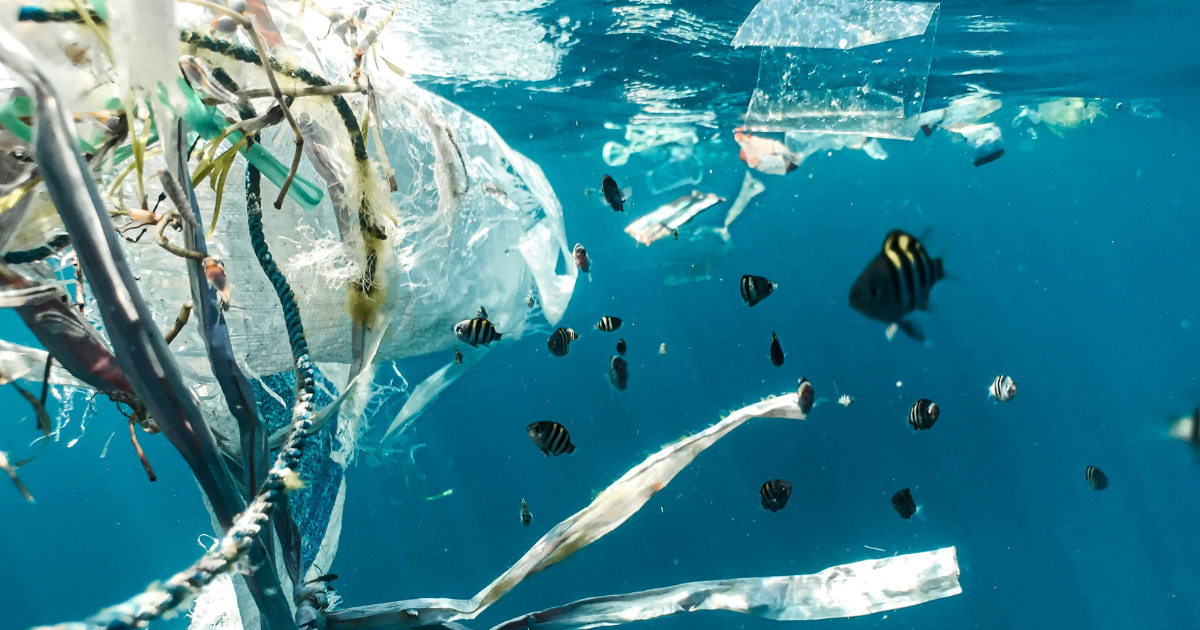
Photo by: Naja Bertolt Jensen on Unsplash
Since its invention in 1860, the use of plastic has become increasingly widespread, playing a transformative role worldwide. Plastic is a synthetic polymer developed by polymerizing monomers extracted from petrochemicals and combining them with other chemicals (Pilapitiya & Ratnayake, 2024). Plastic's versatile relevance is unprecedented; it is durable, water resistant, lightweight, flexible and has relatively cheap production costs. In 1950, plastic consumption was around 2 million tons; by 2022 consumption grew to 400.3 million tons (Poblacki et al., 2025). Worldwide plastic production is expected to double over the next two decades due to urbanization, ease of access, and a growing population (Pilapitiya & Ratnayake, 2024).
Despite its benefits, there has been a growing awareness of the detrimental impact that plastic poses to the environment and human health. Plastic waste has become a global crisis, and finding a solution is critical.
Plastic waste negatively impacts ecosystems, oceans, and human health worldwide. Roughly two-thirds of global plastics are used for less than a month, highlighting the scale of single-use consumption. At the same time, the rate of degradation of the material is alarmingly slow, ranging from 100 to 1000 years, resulting in mass amounts of plastic in landfills (Pilapitiya & Ratnayake, 2024). Currently, 79% of plastic waste accumulates in landfills or the natural environment (Vuppaladadiyam et al., 2024). Every year, 8 to 10 million tons of plastic enter the ocean, accounting for 80% of all marine pollution (Pilapitiya & Ratnayake, 2024). This results in adverse effects on marine animals, such as getting trapped in netting and the ingestion of microplastics, resulting in the accumulation of plastics in digestive systems, causing internal injuries(Pilapitiya & Ratnayake, 2024). Ocean currents transport large plastics to shallow areas, where they damage coral reefs. Coral often consumes microplastics, mistaking them for food. Not only does plastic waste have harmful effects on the natural world, but it can have serious consequences for human health. Chemical structures in plastics, such as Bisphenol A (BPA) and phthalates, can damage human health. BPA enters the human body through various sources, the primary being diet. BPA can cause serious health issues, including cardiovascular disease, chronic kidney disease, congenital disabilities, cancer, and respiratory disease. Phthalates enter the body through ingestion, inhalation, and skin contact and have potential adverse effects such as reduced growth rate and food consumption (Pilapitiya & Ratnayake, 2024). Plastic waste has a negative impact on humans, ocean life, and our planet.
Urgent and coordinated solutions must be developed to combat this escalating global problem. The three R's - reduce, reuse, recycle - are critical to solving the global plastic crisis. Individuals can choose to reduce their use of plastic products. The government can educate the public about the harmful effects of plastic use and create policies which incentivize reduced use at individual and corporate levels. Many nations have introduced bans on single-use plastics, and others are starting to impose taxes to discourage the production of single-use plastics, encouraging companies to find alternatives. Individuals can choose to reuse plastic products as well; reusing within the home and community sharing boards are some local solutions. The most significant gains for plastic waste management can be made in recycling. Local governments have had some success with waste management recycling programs, but success is limited, with only 9% of plastics recycled globally (Vuppaladadiyam et al., 2024).
Plastic waste is managed mainly through incineration and landfills, which reflects a linear model in which plastic is discarded into the environment and weathered down into micro and nanoplastics with detrimental effects. The plastic waste crisis will continue to spiral for the worse if this model is not reconstructed. The focus recently has been on moving from a linear to a circular economy, in which plastic is recycled through mechanical and chemical methods while recovering energy through incineration (Pandey et al., 2023).
Mechanical recycling occurs in stages — separating, grinding, washing, drying, granulating, compounding, and finally converting the small pieces into new products (Pilapitiya & Ratnayake, 2024). A challenge with this method is that as plastic products are recycled multiple times, the quality of the material decreases. Mineral fillers or elastomers can be added, but they become hard to remove when recycled again.
Chemical recycling is a significant area for potential research and development. Not only does it reduce plastic waste, and in the case of catalytic pyrolysis, more energy efficiently, but the liquid oil produced has the potential to address the depletion of fossil fuels through conversion into products like synthetic crude oil and transportation fuels (Vuppaladadiyam et al., 2024). Chemical recycling is potentially attractive to companies seeking a viable business plan while hoping to do good for the planet.
National infrastructures could incentivize sustainable business models that embrace the circular economy to limit waste (Vuppaladadiyam et al., 2024).
Regarding the marine plastic crisis, there must be international cooperation to clean up and protect our oceans (Pilapitiya & Ratnayake, 2024).
Plastic use is at an all-time high globally, and managing its disposal has created a challenge. Innovative solutions are available, arising creatively from the well-known 3Rs. Progress can be made when individuals, corporations, and governments collectively commit to reducing plastic waste and investing in sustainable systems.
Reference List:
Chauhan, G., & Sevda, S. (2024). Solid waste management: Chemical approaches. CRC Press.
Jiang, J., Shi, K., Zhang, X., Yu, K., Zhang, H., He, J., Ju, Y., & Liu, J. (2022). From plastic waste to wealth using chemical recycling: A review. Journal of Environmental Chemical Engineering, 10(1). https://doi.org/10.1016/j.jece.2021.106867
Khan, A. R. (2024, December 20). Recycling won’t solve our planet-killing plastic-pollution problem. The Globe and Mail. https://www.theglobeandmail.com/opinion/article-recycling-wont-solve-our-planet-killing-plastic-pollution-problem
King, S., & Locock, K. E. S. (2022). A circular economy framework for plastics: A semi-systematic review. Journal of Cleaner Production, 364. https://doi.org/10.1016/j.jclepro.2022.132503
Lehtimäki, H., Aarikka-Stenroos, L., Jokinen, A., & Jokinen, P. (2024). The Routledge handbook of Catalysts for a Sustainable Circular Economy. Routledge.
Nayanathara Thathsarani Pilapitiya, P. G. C., & Ratnayake, A. S. (2024). The world of plastic waste: A review. Cleaner Materials, 11. https://doi.org/10.1016/j.clema.2024.100220
Pandey, K. P., Jha, U. R., Kushwaha, J., Priyadarsini, M., Meshram, S. U., & Dhoble, A. S. (2023). Practical ways to recycle plastic: Current status and future aspects. Journal of Material Cycles and Waste Management, 25(3), 1249–1266. https://doi.org/10.1007/s10163-023-01611-0
Pobłocki, K., Pawlak, M., Drzeżdżon, J., & Jacewicz, D. (2025). Catalytic materials based on metals (ions) used in the upcycling of plastics and polymers into fuels and valuable chemicals as part of sustainable development. Materials Science and Engineering: Reports, 162. https://doi.org/10.1016/j.mser.2024.100881
Satti, S. M., Hashmi, M., Subhan, M., Shereen, M. A., Fayad, A., Abbasi, A., Shah, A. A., & Ali, H. M. (2024). Bio-upcycling of plastic waste: A sustainable, innovative approach for the circular economy. Water, Air, & Soil Pollution, 235(6). https://doi.org/10.1007/s11270-024-07122-4
Vuppaladadiyam, S. S. V ., Vuppaladadiyam, A. K., Sahoo, A., Urgunde, A., Murugavelh, S., Šrámek, V ., Pohořelý, M., Trakal, L., Bhattacharya, S., Sarmah, A. K., Shah, K., & Pant, K. K. (2024). Waste to energy: Trending key challenges and current technologies in waste plastic management. Science of the Total Environment, 913. https://doi.org/10.1016/j.scitotenv.2023.169436
Published on