The Self-Improvement Craze
Written by: Mohammad Balar, Scholar Writer, 3rd Year Medical Science
Photo by: Seema Miah on Unsplash
Throughout history, people have been drawn to the pursuit of becoming a better version of who they are. In ancient societies, philosophers, religious thinkers, and scholars reflected on virtue, discipline, and The Good Life, seeking to define what it meant to live well and to refine one’s character. Centuries later, during the industrial and scientific advances of the nineteenth and early twentieth centuries, this same drive for self-betterment helped fuel discoveries and inventions that still shape the modern world. By the mid-1900s, self-improvement began to take on a more structured form through psychology, self-help writing, and emerging ideas about efficiency, productivity, and success. In the twenty-first century, especially following the COVID-19 pandemic, this long tradition has evolved into a self-improvement culture that feels increasingly intense and demanding compared to earlier periods.
Many of the qualities we now associate with self-improvement, such as discipline, consistency, and ambition, were once simply observed in others and quietly admired. People saw scientists, artists, and leaders who devoted themselves to their work, and they were drawn to the steady effort and passion behind their success. For much of history, becoming healthier, building good habits, or working hard was woven into ordinary life rather than treated as a separate project called “self-improvement.” In recent years, this relationship with improvement has shifted. The content we interact with every day, from social media feeds to podcasts and short videos, presents a constant flow of routines, systems, and habits that claim to be essential for success. Many of these reach far beyond what is realistic or necessary, and instead of inspiring people, they often create pressure, comparison, and eventual burnout.
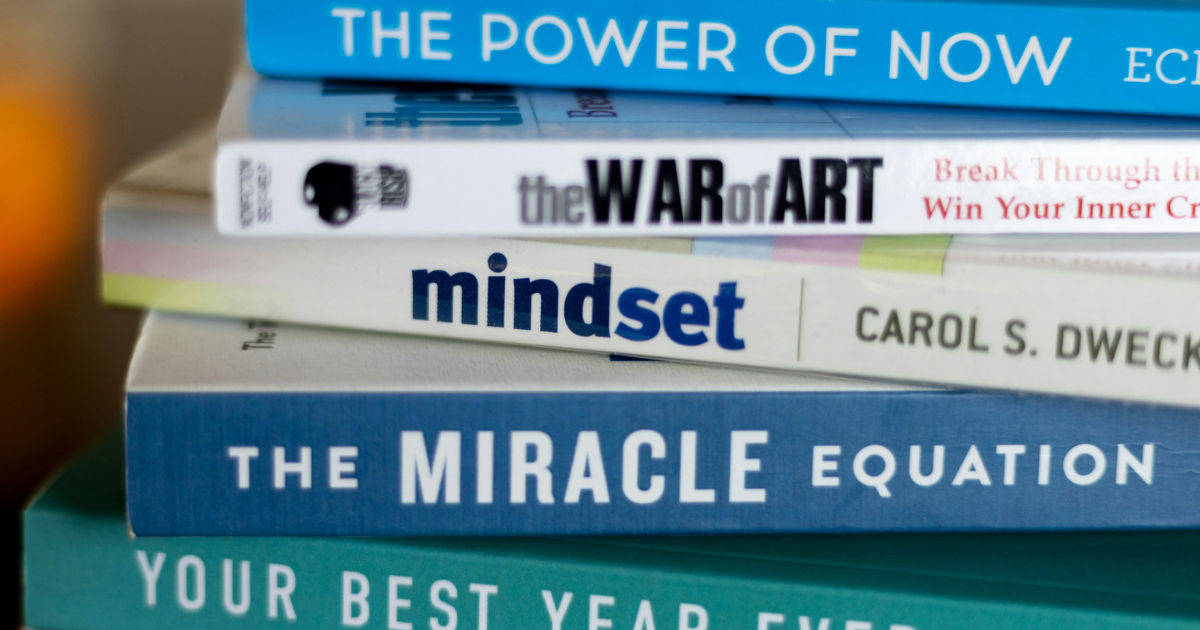
Within this culture, countless self-improvement books offer genuinely helpful guidance. Titles such as The 7 Habits of Highly Effective People, A New Earth: Awakening to Your Life’ s Purpose, and more recent works like Atomic Habits provide thoughtful frameworks for building better routines and mindsets. These books can serve as strong foundations for growth, but they also raise an important question: at what point does reading about improvement replace actually living it? It is easy to highlight quotes, feel a brief surge of motivation, and then lose it themoment you keep scrolling, answer an email, or move on to the next piece of advice. Self-improvement needs a foundation, and that foundation is not built by drowning in an endless stream of tips, checklists, and slogans. It is built by honestly assessing what you need, choosing a few practices that genuinely fit your life, and accepting that what transforms one person may not be what transforms you. At some point, we each have to decide whether we are building a life or simply collecting ideas about one.
The culture of self-improvement is not entirely negative. Thoughtful routines can be steadying, especially during demanding academic years when students are balancing coursework, extracurriculars, and plans for the future. Clear goals can provide direction, and habits such as regular exercise, journaling, or intentional studying can create a sense of structure that makes daily life feel more manageable.
The difficulty arises when improvement shifts from a personal choice into a perceived obligation. When every hour of the day feels like it must be optimized, burnout stops being a possibility and starts becoming a pattern. Rest begins to feel undeserved, hobbies slowly turn into tasks to track, and productivity starts to matter more than presence. In that space, it becomes easy to confuse constant activity with genuine growth.
Real growth is quieter than the surge of motivation that comes from a quote, a video, or a trend. It does not depend on feeling inspired every moment, nor does it require a perfectly curated routine. Instead, it comes from progress that is honest and sustainable. Choosing habits that fit your life, allowing yourself to rest without guilt, and paying attention to what truly energizes you are all part of a healthier relationship with self-improvement.
In many ways, this brings us back to where people began. Ancient thinkers, artists, and early scientists did not improve themselves in order to perform for others. They chose a small number of principles to live by, returned to them every day, and devoted themselves to work they found meaningful. Their self-improvement was not a constant search for the next method, but a steady commitment to a few pillars they believed in. In the end, the goal is not to build a life thatonly looks impressive from the outside. It is to build one that, like theirs, rests on values you truly care about and feels grounded, purposeful, and genuinely your own.
Reference List
Effing, M. M. (2009). The origin and development of self-help literature in the United States: The concept of success and happiness, an overview. Atlantis, 31(2), 125–141.
Lamb-Shapiro, J. (2025). “Why self-help might be making you feel worse.” Vox.
Andrade, F. C., Erwin, S., Burnell, K., & colleagues. (2023). Intervening on social comparisons on social media: Electronic daily diary pilot study. JMIR Mental Health, 10, e42024
Garratt-Reed, D., Roberts, L. D., & Heritage, B. (2018). Is perfectionism associated with academic burnout through self-efficacy? Journal of College Student Development, 59(4), 477–493
Covey, S. R. (1989). The 7 habits of highly effective people. Free Press.
Tolle, E. (2005). A new earth: Awakening to your life’ s purpose. Viking Press.
Clear, J. (2018). Atomic Habits: An easy and proven way to build good habits and break bad ones. Avery.
Published on